Check out this interactive map showing light pollution from urban centers around the world. Light pollution at night can blot out the stars, so the brighter the area, the harder it is to see stars in the night sky.

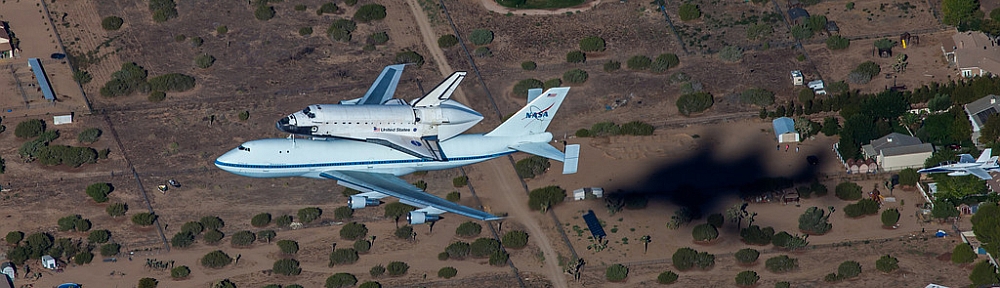
Check out this interactive map showing light pollution from urban centers around the world. Light pollution at night can blot out the stars, so the brighter the area, the harder it is to see stars in the night sky.
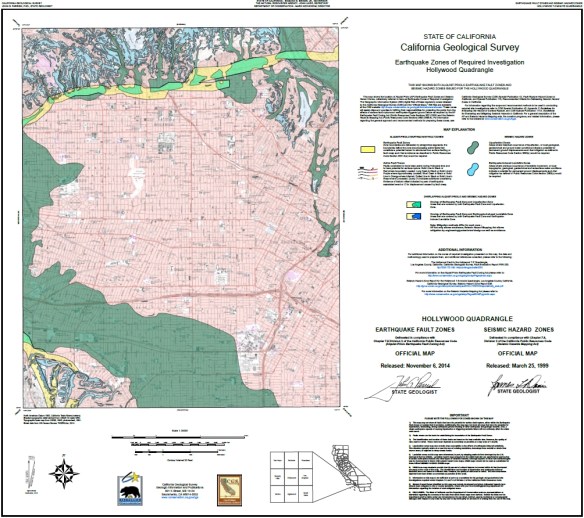
The Alquist-Priolo Earthquake Fault Zone Act (1972) and the Seismic Hazards Mapping Act (1990) direct the State Geologist to delineate regulatory “Zones of Required Investigation” to reduce the threat to public health and safety and to minimize the loss of life and property posed by earthquake-triggered ground failures. Cities and counties affected by the zones must regulate certain development “projects” within them. These Acts also require seller of real property (and their agents) within a mapped hazard zone to disclose at the time of sale that the property lies within such a zone.
The California Geological Survey has released 7 new Alquist-Priolo Earthquake Fault Zone maps in the San Bernardino County and Tahoe Basin areas. Check it out.
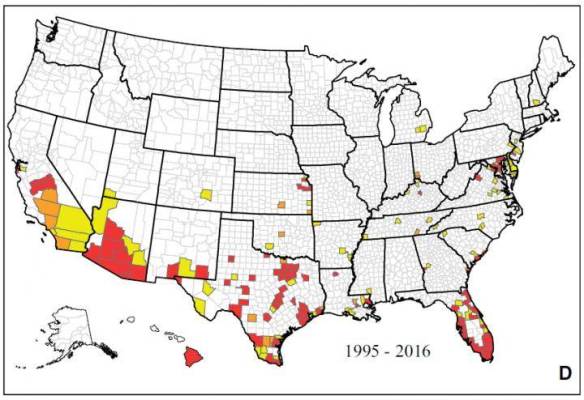
A new map showing where mosquitoes that can carry the Zika virus include 40 states and Washington D.C. The map was compiled by experts at the Centers of Disease Control and Prevention. The CDC used records from their mosquito-borne disease database, mosquito control agencies, university researchers and state and local health departments. Click the map to read the article.
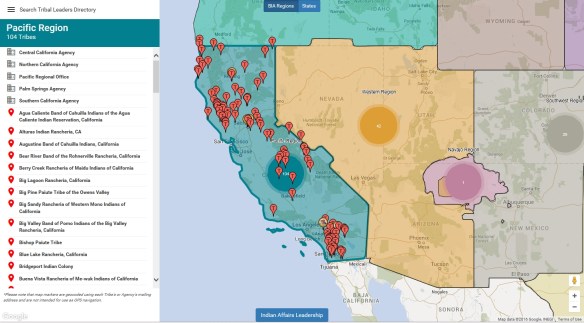
The Bureau of Indian Affairs (BIA) first developed the Tribal Leaders Directory as an internal reference document for its employees. It quickly became one of Indian Affairs’ most requested documents, and is now used by federal, state and local governments, news media, businesses, researchers, and the general public as a resource to help them connect with Indian Country. The BIA’s commitment to enhanced communication led to transforming this publication into the electronic interactive map. Check it out.
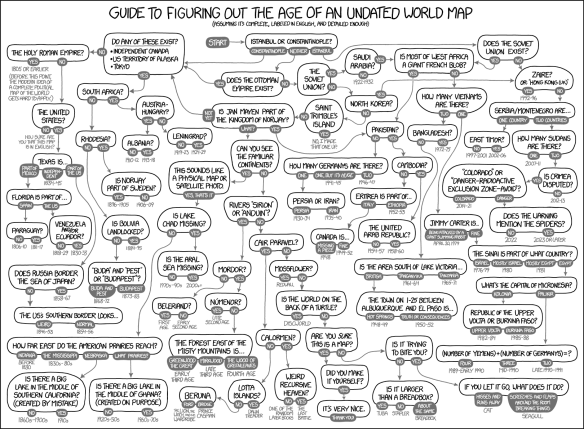
Fantastic flowchart by xkcd showing how you can determine the age of an undated world map … or sometimes not!
Didn’t get to go to the ESRI Developer Summit in Palm Springs? Here is a recap of the top technology takeaways with some videos as well. Looks like ArcGIS API 4.0 for JavaScript and Vector Tile Maps will be a big thing this year. Check it out.
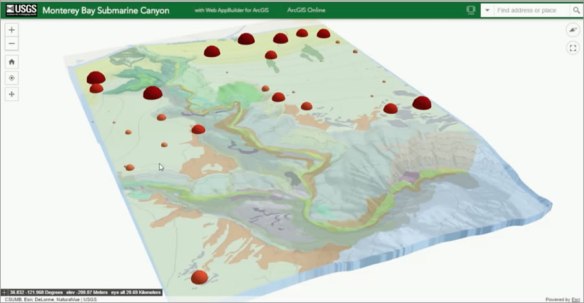
The National Geodetic Survey (NGS) deployed the NOAA Office of Marine and Aviation Operation’s King Air aircraft to complete the collection of geo-referenced oblique imagery of the West Coast. More than 3,000 images were collected from the U.S.-Mexico border to Cape Flattery, WA. The imagery will be used to assess impacts of the ongoing El Niño event in several NOS mission areas, including navigation and coastal zone management. Continue reading
Check out this article about how Google Maps has changed from emphasizing cities at the expense of roads to emphasizing the road network at the expense of cities. Also the article shows how a 1960’s era paper map does a better job balancing roads and city names.

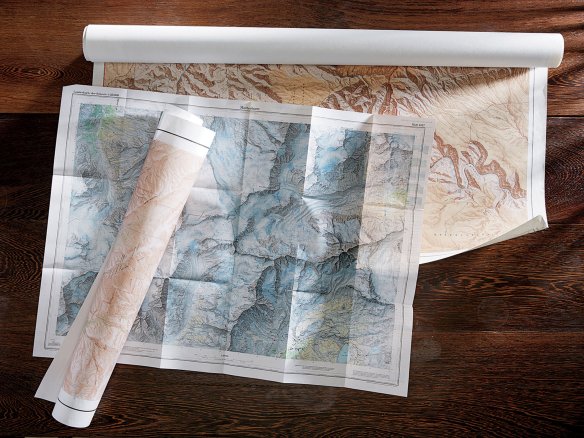
At the close of the Second World War, the United States government embarked on an enormous artistic enterprise. It is estimated to have cost nearly $3 billion and, at its height, employed more than 2,000 people. I am talking about the topographic mapping program of the United States Geological Survey.
Read more on the New York Times Magazine website by clicking below.
If you live in LA, then you might be interested in this interactive map. As part of the LA’s Clean Streets initiative, the City’s Bureau of Sanitation drove all of LA’s public streets and alleys, travelling over 22,000 miles, and gave each block a “cleanliness score” from 1-3, 1 being Clean, 2 Somewhat clean, and 3 Not clean. Continue reading

