ArcGIS Online Update March 22

ESRI will be updating ArcGIS Online on March 22, 5pm to midnight (PDT).

Update Highlights

Mapping

  • Editing enhancements including snapping controls and additional capabilities in the editor pane
  • Ability to duplicate feature layers in Map Viewer to customize the configuration of a layer without affecting the configuration of the source layer
  • New nested group capability, simplifying visualization and review of complex data

Content and Member Management

  • Administrators can allow members to transfer their own content to other members of the organization. 
  • Administrators can set up member categories to make it easy for the organization’s members to find each other by searching characteristics such as department or project.

Interact with Maps and Data Using ArcGIS Instant Apps

  • Exhibit, a new app template, follows a sequential order as it guides your audience through a map and tells a story with interactive slides.
  • Portfolio includes two new layouts for additional flexibility as you build one app to showcase maps, apps, and web pages about a topic or location. 
  • Attachment Viewer allows viewers to update the attribute information of the attached images or videos while navigating through each feature.

Home Page Replacement

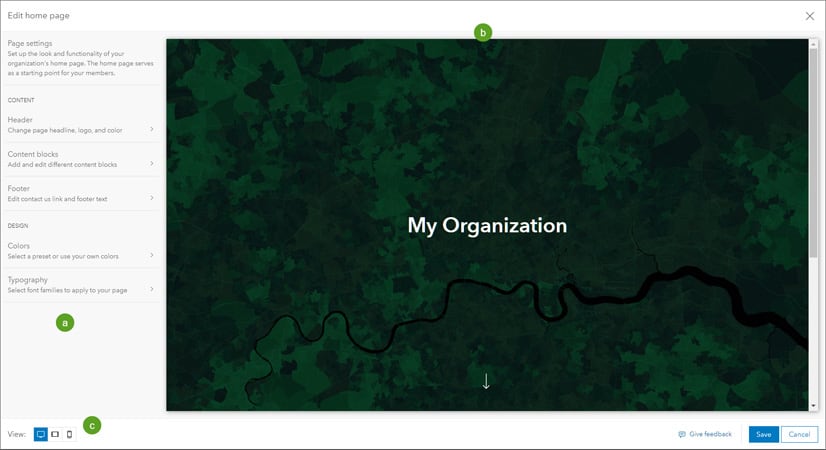
Legacy ArcGIS Online home pages will automatically be replaced with a new default home page unless the administrator requests an extension through the Organization page. Transition to the new home page to ensure that your home page looks and performs as desired.

Early Adopter Community

Would you like to try the features planned for the upcoming ArcGIS Online update? Sign up for the ArcGIS Online Early Adopter Community (EAC) with your ArcGIS Online login. Within the ArcGIS Online testing environment, EAC members can try upcoming features, test compatibility with their existing workflows, influence product development, and engage with the ArcGIS Online development team and other members of the EAC.

Time to Upgrade to new ArcGIS Basemap Layer Service

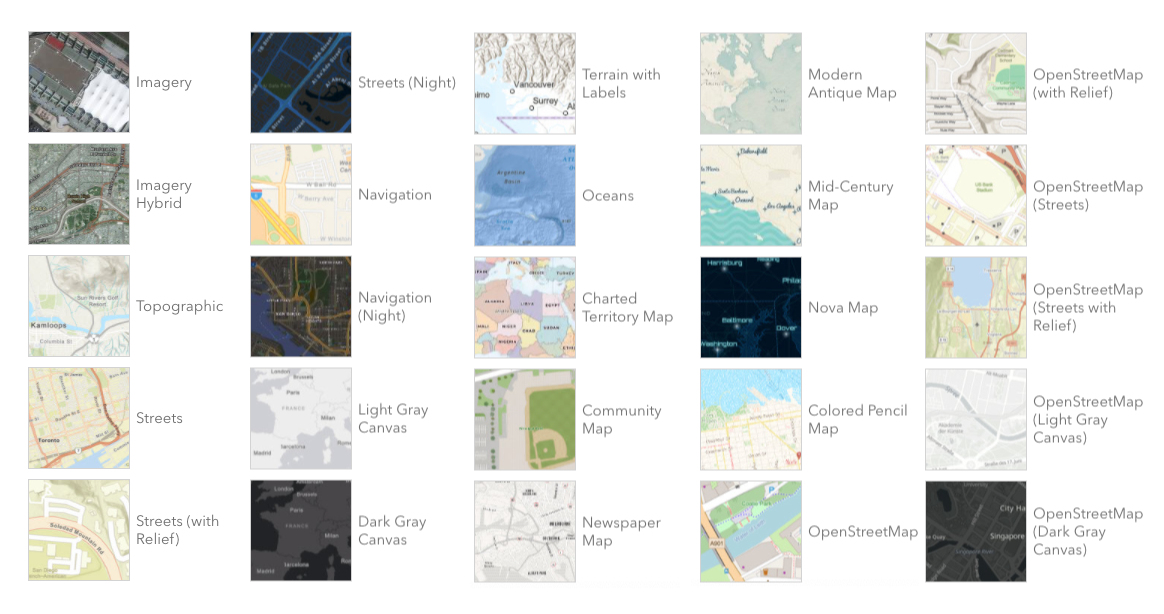
If you are using the legacy ArcGIS Online tile services in your apps and maps, then it’s time to upgrade to the new ArcGIS basemap layer service. The legacy tile services are in mature status and are no longer being updated. April 30, 2022 is the deadline to upgrade to the new services. Click below for more information and how to upgrade to the new services.

WindNinja Mobile

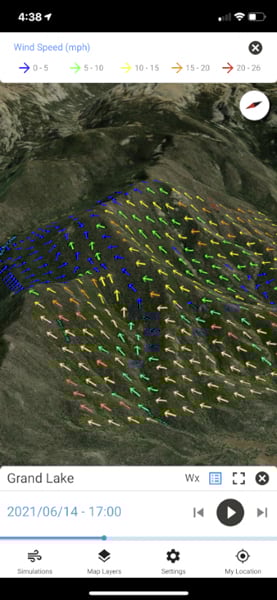
If you are a firefighter, you might find WindNinja Mobile a great tool to have while out in the field. WindNinja Mobile, which can be downloaded for free from app marketplaces such as the Apple App Store and Google Play, was mainly created for firefighters with mobile devices or tablets who need to quickly compute and visualize wind direction and speed simulations. Click below to read an article about it.

Cartography MOOC

Thousands of GIS professionals have signed up for ESRI’s free online course to learn how to make beautiful maps using ArcGIS Pro. If you’re interested in exploring the cartographer’s craft and trying out the latest ArcGIS Pro mapping tools, you are invited to join the course too.

In the course, ESRI’s top cartographers review essential mapping concepts and share tips and techniques to create accurate maps that showcase your data and analysis results.

The course includes the following:

  • Step-by-step exercises, videos, quizzes, and discussion
  • Access to ArcGIS Pro and ArcGIS Online software
  • Certificate of completion

Join the course, get inspired, and do more with maps. The course runs from February 16 to March 30. Click here for more info and to register for the course.

SCAG 2022 Student Showcase

Submit Your Idea for an ArcGIS StoryMap!

The Southern California Association of Governments (SCAG) is excited to announce a major opportunity for college and university students in the region. The 2022 Student Showcase is a storymapping competition that challenges students to think innovatively and compete for cash prizes in two award categories: Best in Show and Audience Awards.

Student participants are invited to conceptualize, create and submit ArcGIS StoryMaps using SCAG’s open data. This is a meaningful way to tell a story or provide insight, showcase plans and projects, engage supporters and stakeholders, illustrate the possibilities of data, and highlight the usefulness of open data at the regional level.

Students are instructed to submit abstracts of their projects by Feb. 22, and if selected, SCAG will request an ArcGIS StoryMap to be submitted. In all, there will be a total of $6,000 awarded (one $2,000 first-place prize and one runner-up $1,000 prize each per category).

For more information on the 2022 Student Showcase, including the program guidelines, visit scag.ca.gov/student-showcase.

Merry Christmas 2021

While Santa tries to figure out where we all live … using a paper map … just in case, here are a few map books you might consider if they don’t arrive soon!

And not an atlas, but a good read:

If you all have other suggestions, please post in the comment section!

Make sure you read about the Physics of Santa, a post from 2015.

Have a Merry Christmas and Happy New Year! -mike

Imagery Capabilities for Government

Every month, the Esri State & Local Connect webinar series brings you 45 minutes of content you need to know, from the people who are dedicated to helping you succeed with GIS. This month the team is taking a deep dive into imagery capabilities for state and local government. 

The diversity and volume of imagery and remote sensing data are growing rapidly. Drone, aerial, and satellite imagery and other types of remotely sensed data are opening new frontiers in nearly every facet of government. In this webinar, we will showcase how the latest imagery capabilities can provide communities with greater insights into nearly every aspect of operations, from urban planning and natural resource management to event management and disaster response.

Click here for more info and to register. Past webinar recordings can be found there too.

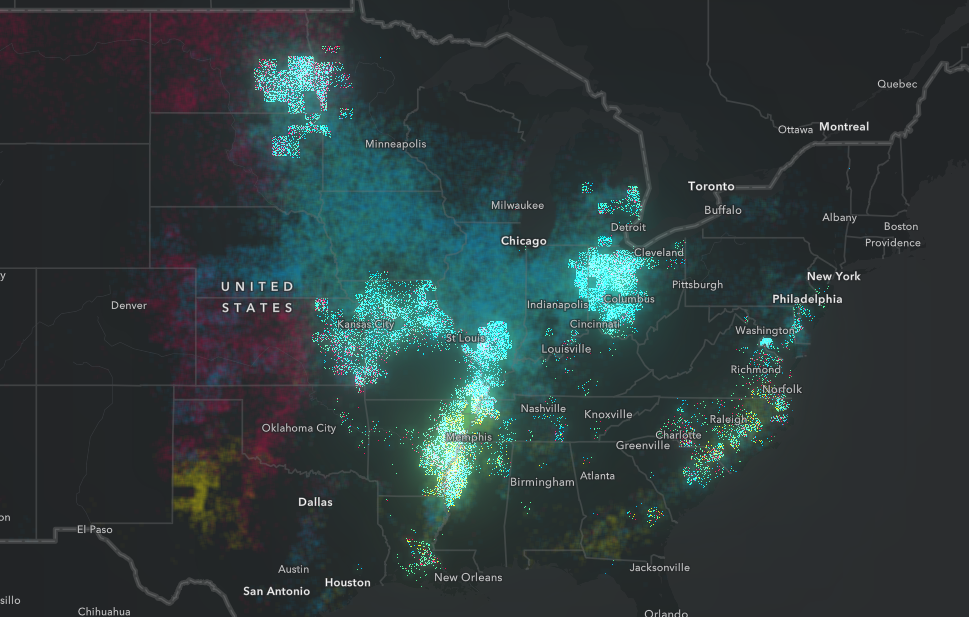
Can You Trust The 2020 Census Data?

After reading up on what the US Census is doing to the 2020 Census data, I have to consider if I can really trust the data to be used for other applications?

You see, the US Census decided to use “differential privacy”, a mathematical technique to introduce statistical noise to “blur” the data. Their reasoning is that because we have powerful computers, anyone could use other data and cross reference the census data to find information on individuals. You can read about it from the US Census here.

However, what happens to the census data, especially at lower levels like the block level, they start messing around with actual numbers of people and other traits like ethnicity, age, sex, etc. For example, according to the US Census, 48 people live on New York’s Liberty Island, but actually no one has lived there since 2012. It also looks like some US States and organizations will be legally challenging the US Census data and the differential privacy technique. To be fair, the US Census has always implemented privacy safeguards using different techniques like “swapping”, but this new technique seems pretty drastic and really not needed. As data scientists duke it out, you can read all about this issue here.

Will you trust the 2020 Census data? You will need to look at it in your own jurisdiction. Burbank’s population strangely went down, so I need to investigate and look at the data more closely. We will need to determine if we can use this data at a tract, block group, or block level to make more informed and accurate decisions. As they say, your mileage may vary. They also say buyer beware!