WindNinja Mobile

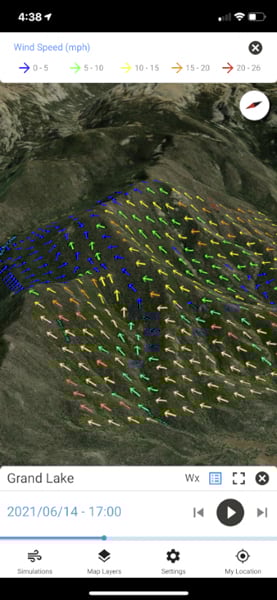
If you are a firefighter, you might find WindNinja Mobile a great tool to have while out in the field. WindNinja Mobile, which can be downloaded for free from app marketplaces such as the Apple App Store and Google Play, was mainly created for firefighters with mobile devices or tablets who need to quickly compute and visualize wind direction and speed simulations. Click below to read an article about it.

Cartography MOOC

Thousands of GIS professionals have signed up for ESRI’s free online course to learn how to make beautiful maps using ArcGIS Pro. If you’re interested in exploring the cartographer’s craft and trying out the latest ArcGIS Pro mapping tools, you are invited to join the course too.

In the course, ESRI’s top cartographers review essential mapping concepts and share tips and techniques to create accurate maps that showcase your data and analysis results.

The course includes the following:

  • Step-by-step exercises, videos, quizzes, and discussion
  • Access to ArcGIS Pro and ArcGIS Online software
  • Certificate of completion

Join the course, get inspired, and do more with maps. The course runs from February 16 to March 30. Click here for more info and to register for the course.

SCAG 2022 Student Showcase

Submit Your Idea for an ArcGIS StoryMap!

The Southern California Association of Governments (SCAG) is excited to announce a major opportunity for college and university students in the region. The 2022 Student Showcase is a storymapping competition that challenges students to think innovatively and compete for cash prizes in two award categories: Best in Show and Audience Awards.

Student participants are invited to conceptualize, create and submit ArcGIS StoryMaps using SCAG’s open data. This is a meaningful way to tell a story or provide insight, showcase plans and projects, engage supporters and stakeholders, illustrate the possibilities of data, and highlight the usefulness of open data at the regional level.

Students are instructed to submit abstracts of their projects by Feb. 22, and if selected, SCAG will request an ArcGIS StoryMap to be submitted. In all, there will be a total of $6,000 awarded (one $2,000 first-place prize and one runner-up $1,000 prize each per category).

For more information on the 2022 Student Showcase, including the program guidelines, visit scag.ca.gov/student-showcase.

Merry Christmas 2021

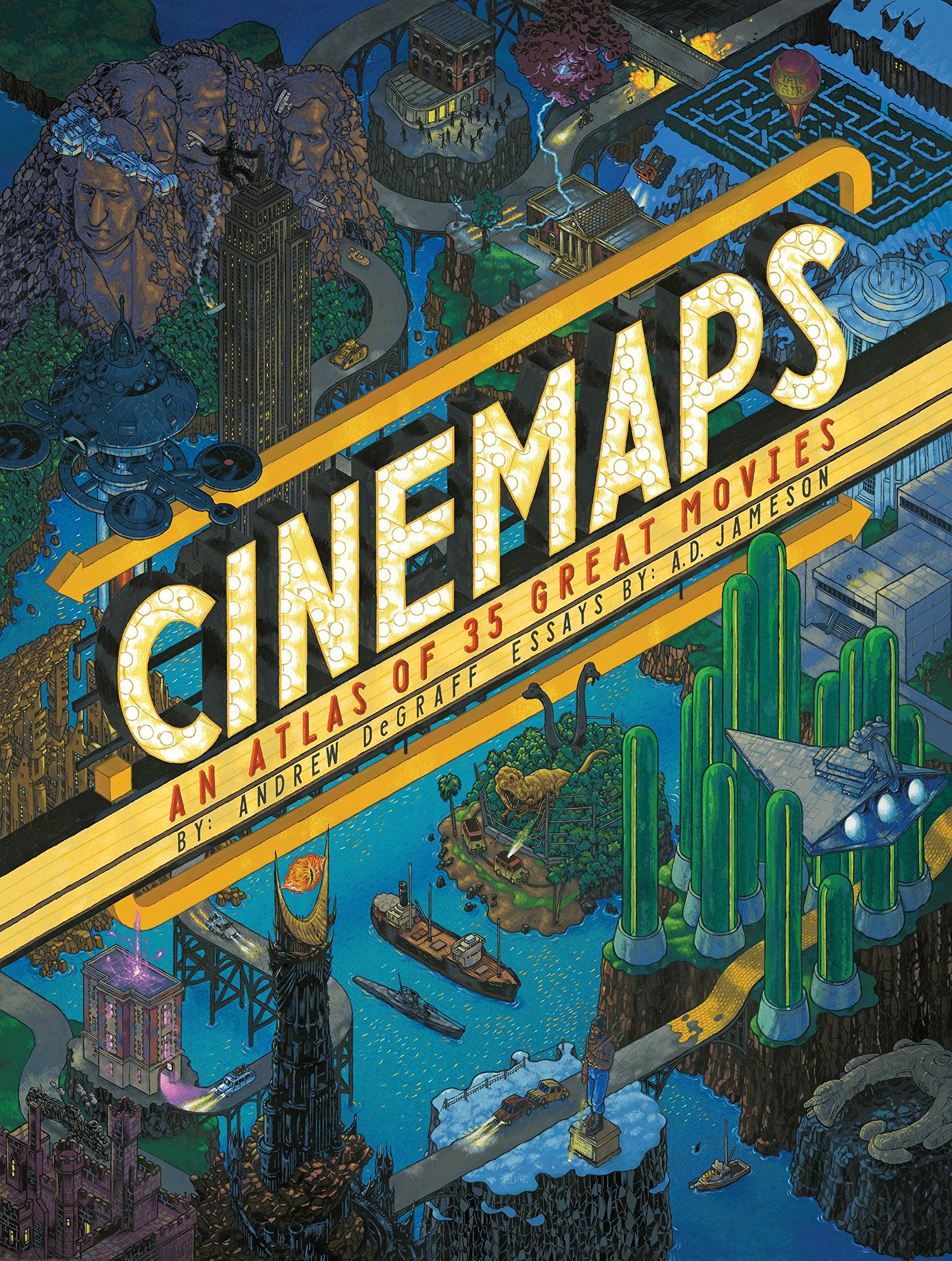
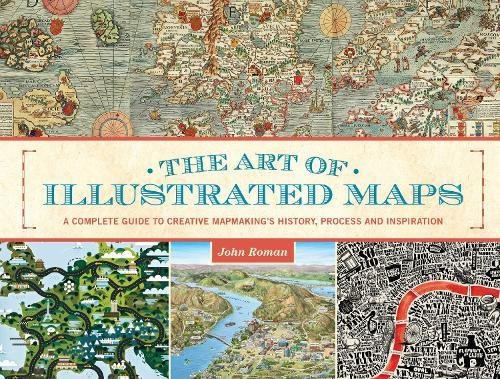
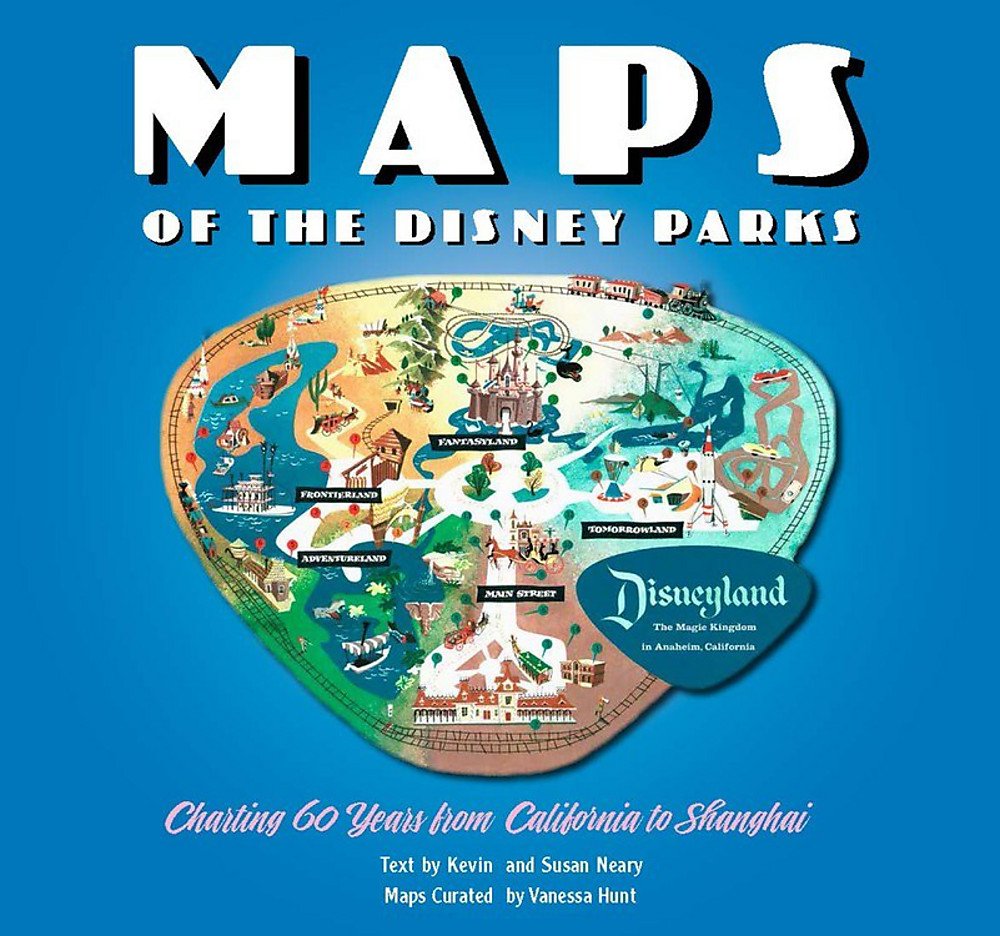
While Santa tries to figure out where we all live … using a paper map … just in case, here are a few map books you might consider if they don’t arrive soon!

And not an atlas, but a good read:

If you all have other suggestions, please post in the comment section!

Make sure you read about the Physics of Santa, a post from 2015.

Have a Merry Christmas and Happy New Year! -mike

Imagery Capabilities for Government

Every month, the Esri State & Local Connect webinar series brings you 45 minutes of content you need to know, from the people who are dedicated to helping you succeed with GIS. This month the team is taking a deep dive into imagery capabilities for state and local government. 

The diversity and volume of imagery and remote sensing data are growing rapidly. Drone, aerial, and satellite imagery and other types of remotely sensed data are opening new frontiers in nearly every facet of government. In this webinar, we will showcase how the latest imagery capabilities can provide communities with greater insights into nearly every aspect of operations, from urban planning and natural resource management to event management and disaster response.

Click here for more info and to register. Past webinar recordings can be found there too.

Can You Trust The 2020 Census Data?

After reading up on what the US Census is doing to the 2020 Census data, I have to consider if I can really trust the data to be used for other applications?

You see, the US Census decided to use “differential privacy”, a mathematical technique to introduce statistical noise to “blur” the data. Their reasoning is that because we have powerful computers, anyone could use other data and cross reference the census data to find information on individuals. You can read about it from the US Census here.

However, what happens to the census data, especially at lower levels like the block level, they start messing around with actual numbers of people and other traits like ethnicity, age, sex, etc. For example, according to the US Census, 48 people live on New York’s Liberty Island, but actually no one has lived there since 2012. It also looks like some US States and organizations will be legally challenging the US Census data and the differential privacy technique. To be fair, the US Census has always implemented privacy safeguards using different techniques like “swapping”, but this new technique seems pretty drastic and really not needed. As data scientists duke it out, you can read all about this issue here.

Will you trust the 2020 Census data? You will need to look at it in your own jurisdiction. Burbank’s population strangely went down, so I need to investigate and look at the data more closely. We will need to determine if we can use this data at a tract, block group, or block level to make more informed and accurate decisions. As they say, your mileage may vary. They also say buyer beware!

2020 Census Redistricting Data

It seems like we have been waiting forever for some 2020 Census Data. Well, you can get started with the P.L. 94-171 2020 Census Redistricting Data. It has been available since August 12. You can find the FAQ page for the product here. Keep in mind the redistricting data only includes demographic characteristics by state, county, city, down to the block level:

  • Race and ethnicity.
  • Population 18 years and over.
  • Occupied and vacant housing units.
  • People living in group quarters like nursing homes, prisons, military barracks and college dorms.

Note you will need to merge the data files with the tract/block group/block TIGER/Line Geodatabases. A feat that has become a little more difficult since you need to manipulate the data a bit to do it. You can read the technical document to find out more.

There is another option and probably an easier one.

Continue reading

World Imagery Wayback

World Imagery Wayback is a digital archive, providing users with access to the different versions of world imagery created over time. Each layer in the archive represents a snapshot of the entire World Imagery map, as it existed on the date it was published. Wayback currently provides access to all published versions of World Imagery, dating back to February 20, 2014. There is an ArcGIS Online item for every version which can be accessed directly from this app.

Available versions of the World Imagery map are presented within a timeline and as layers in a list. Versions that resulted in local changes are highlighted in bold white, and the layer currently selected is highlighted in blue. Point and click on the map for additional imagery details within the selected layer. One or more layers can be added to a queue and pushed to a new ArcGIS Online web map. Check it out!