Spy Satellite Images Unveil Lost Cities

The Program

During the cold war, there was a spy satellite program called Corona.  The Corona program was a series of American strategic reconnaissance satellites produced and operated by the Central Intelligence Agency Directorate of Science & Technology with substantial assistance from the US Air Force. The Corona satellites were used for photographic surveillance of the Soviet Union (USSR), the People’s Republic of China, and other areas beginning in June 1959 and ending in May 1972.  The name “Corona” was a code name, not an acronym.

The Technology Behind the Photos

During the program, there were 144 satellites launched, of which 102 returned usable photographs.  The satellites orbited at altitudes of 100 miles above the Earth, with later missions orbiting even lower at 75 miles.

The satellites used special 70mm film with a 24 inch focal length camera manufactured by Eastman Kodak.  The film was 0.0003 inches thick, with a resolution of 170 lines per 0.04 inches of film.  The amount of film carried by the satellites varied from 8,000 feet for each camera to 16,000 feet.  Most of the film shot was black and white.

So how did we get the film back?  This is the cool part!  The film was retrieved from orbit via a reentry capsule (nicknamed “film bucket“).  Exposed film would be stored in the capsule, and when ready would then be ejected from the satellite to fall to earth.  After the fierce heat of reentry was over, the heat shield surrounding the capsule was jettisoned at 60,000 feet and parachutes were deployed to slow the rate of descent.  The capsule was then caught in mid-air by a passing airplane towing an airborne claw which would then winch it aboard!

The capsules were also designed for landing in the ocean.  A salt plug in the base would dissolve after two days, allowing the capsule to sink if it was not picked up by the US Navy.  On occasion the capsules landed by accident on land, which prompted the removal of the word “Secret” stamped on the capsule and replaced with words in eight languages offering a reward for their return to the United States.  Hmm … I wonder if that worked?  The film was processed at Eastman Kodak’s Hawkeye facility in Rochester, New York.

Here is a video about the Corona program.  And here is an old calibration target used by the Corona satellites near Casa Grande, Arizona.

The Images

In 1995, President Clinton declassified 800,000 photographs from the Corona project in order to make them available for environmental and historical research.  Archaeologists working in the Near East have been quick to embrace this newly available resource, which capture images of sites and landscapes in the 1960’s. Research into ancient landscapes at Harvard has used these images to investigate the communication networks of the Early Bronze Age, state-sponsored irrigation under the Assyrian and Sasanian empires, and pastoral nomadic landscapes in northwestern Iran and southeastern Turkey.

For archaeology, Corona photographs have two tremendous advantages over other space-based imagery sources.  Many rural parts of the Near East have escaped agricultural development and urban growth until recent decades, when many have been damaged or destroyed.  Corona photographs predate this destructive development and thus preserve a record of landscapes that are difficult or impossible to map on the ground.  Corona images were made before cities such as Mosul in Iraq and Amman in Jordan overran the many archaeological sites near them.  Dams have also flooded river valleys, covering many other archaeological sites.  As cities grew, the industrial farming and irrigation that supported them grew too, obscuring roads and sites clearly visible in the Corona images.  More recent commercial sensors such as Ikonos and QuickBird have a higher resolution, but they capture the modern damaged landscape of today.

Corona photographs are also of high resolution, capable of displaying features as small as 2 meters in ideal conditions.  Many features visible in Corona cannot be seen in medium resolution satellites such as Landsat (30 m) or ASTER (15 m).

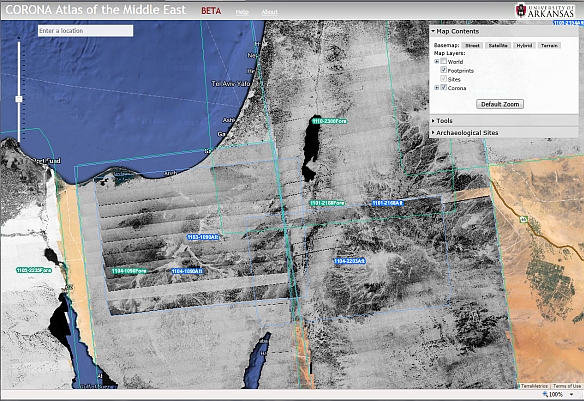
Recently, a team from Arkansas’s Center for Advanced Spatial Technologies have built a free, public tool to explore the Corona images of the Middle East.
corona

The team plans on adding more images from Corona, such as areas of Russia and China.
Mapping Millions of Runs and Rides

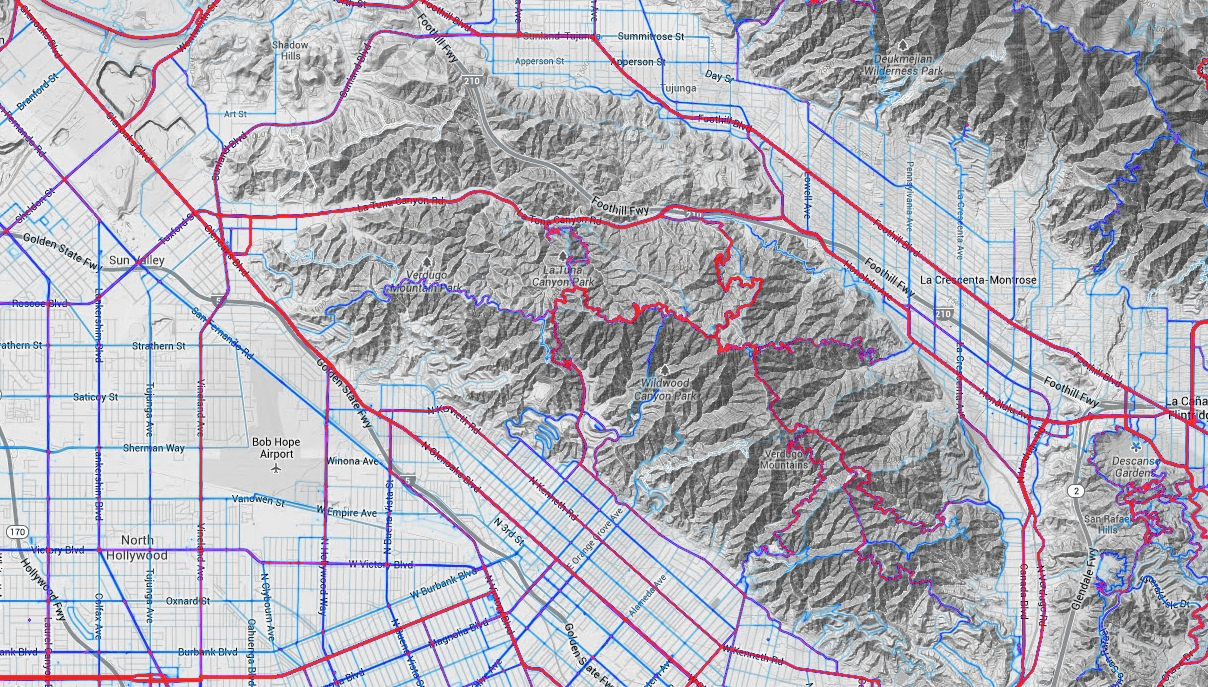
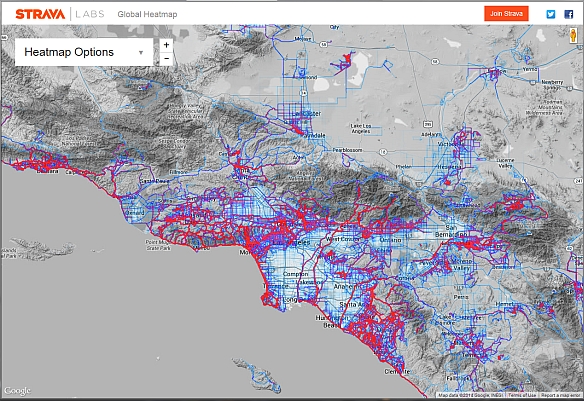
Strava, which provides an app for you to track your rides and runs via your iPhone, Android or dedicated GPS device, has released an interactive global heat map showing logs of 77,688,848 rides and 19,660,163 runs.  The heat map draws from about 220 billion data points and provides a detailed picture of where people bike and run.  Below is the LA area, but you can zoom out to view the world.

strava1

Popular routes are in red, moderate in dark blue, and less traveled in light blue. You can view biking or running separately or together, change the path opacity, and also change the heat map style.

strava2

If you are a planner looking to establish new bike paths and trails, this information could be gold for you!

Port of LA/Long Beach on Skybox

I noticed on the home page of Skybox Imaging’s site, they feature images of a portion of Port of LA and Port of Long Beach.  The demo zooms to different locations and explores the imagery data.

skybox

Also check out one of their satellite HD Videos of Burj Khalifa on April 9, 2014.  The shadow of the world’s tallest building (more than half a mile high) is most impressive!  I also like the jet that flys by and the traffic moving on the highway.

http://vimeo.com/92251790

Very cool!  You can view it larger here.  And more of their videos here.

LA’s Electrical Use

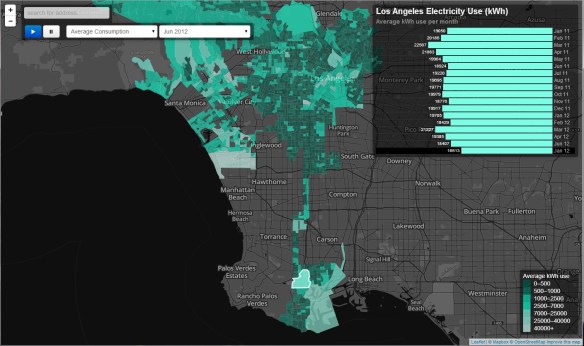
Researchers at UCLA have put together an interactive map showing electrical use in the City of Los Angeles neighborhoods.  The data is organized by block group and shows the average amount of electricity used per customer for each month over a one and a half year peroid, how that compares to other neighborhoods, and how energy use has changed over the study period.

You can hover over block groups on the map to see electricity usage (kWh) over time, switch between average use per month and percent change from one month to the next, zoom in and click to show land use, income, and other characteristics, and animate the usage over time.

The app is best viewed in Chrome, Firefox, and Safari … sorry Internet Explorer!

la_electric_use

EPA Map of California Tracks Pollution

The California Environmental Protection Agency has released a statewide list of census tracts most burdened by pollution. Many of the worst pollution pockets identified are in the San Joaquin Valley, Los Angeles County and the Inland Empire.

The screening tool, called CalEnviroScreen, was developed by the Office of Environmental Health Hazard Assessment, a branch of Cal/EPA, to pinpoint the communities with the highest exposure and vulnerability to multiple environmental hazards, including polluted air and water, waste facilities and contaminated soil.  The rankings, however, are not based only on measures of environmental exposure. They also take into account socioeconomic characteristics and health data on residents to assess the overall vulnerability of communities. Those factors include poverty, education, unemployment, rates of asthma and low-birth-weight infants.

You can read more about it in this LA Times article.

epapolutionapp

As a side note, I find the CalEPA app a little slow in Internet Explorer.  Google Chrome was a little faster.  They are using ArcGIS Online technology for their mapping.  If you do a search for “calenviroscreen” on ArcGIS.com, you will see a listing of their maps and apps for versions 1.1 and 2.0.

Tax Freedom Day 2014

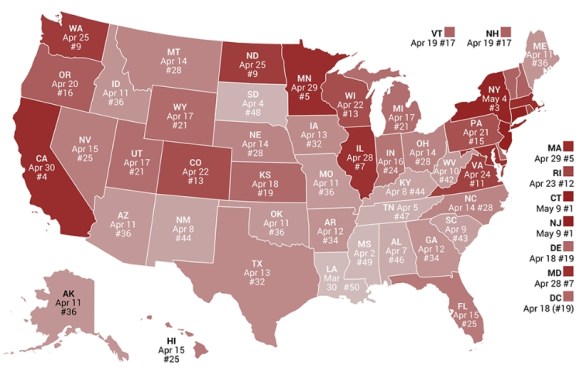
In the spirit of April 15th, tax day in the US, remember Tax Freedom Day too.  This year Tax Freedom Day falls on April 21st, three days later than last year.

Tax Freedom Day is the day when the nation as a whole has earned enough money to pay its total tax bill for the year.  We all work over 3 months for the government each year!  Click below to see a calendar-based illustration and map of the cost of government.

taxfreedomday

In California, our Tax Freedom Day falls on April 30th.  California ranks #4.

1932 Atlas of the Historical Geography of the US

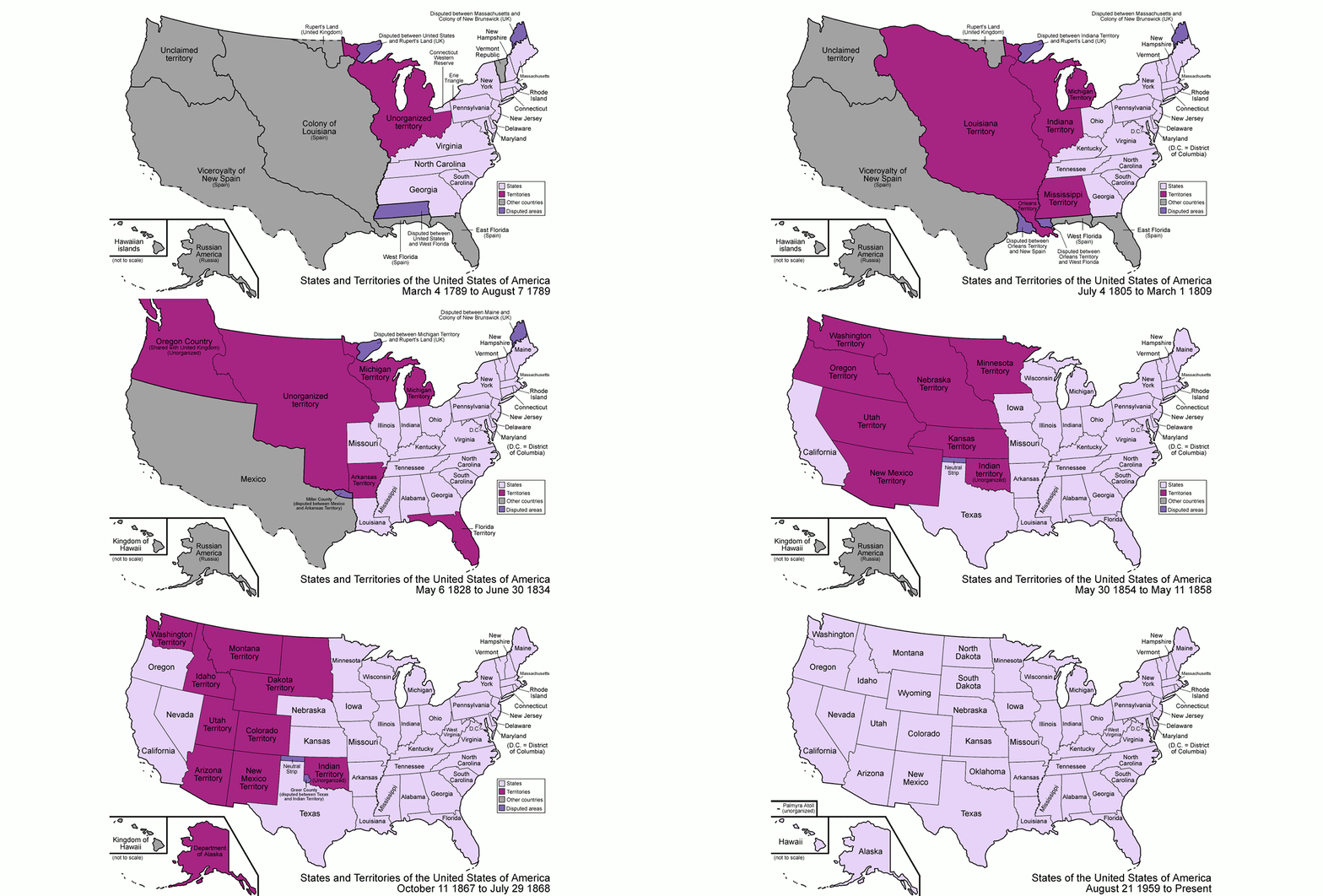
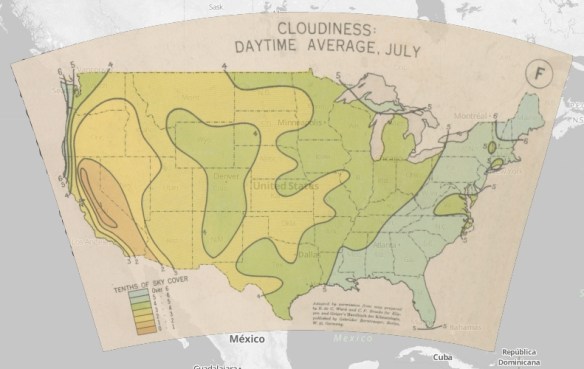
In 1932, Charles O. Paullin and John K. Wright published an Atlas of the Historical Geography of the United States. It was a seminal reference book, containing almost 700 maps, and now it’s been digitized for you to explore online.  It is full of fascinating data, mapped across the US, from weather, travel, population, to gold reserves, oil fields, and vegetation types.  It’s been painstakingly transcribed into digital format, which you can view georectified or as scanned plates.  Check it out!

1932atlas

National Land Cover Database

Just released, the latest edition of the nation’s most comprehensive look at land-surface conditions from coast to coast shows the extent of land cover types from forests to urban areas. The National Land Cover Database (NLCD 2011) is made available to the public by the U.S. Geological Survey and partners.

Dividing the lower 48 states into 9 billion geographic cells, the massive database provides consistent information about land conditions at regional to nationwide scales. Collected in repeated five-year cycles, NLCD data is used by resource managers and decision-makers to conduct ecosystem studies, determine spatial patterns of biodiversity, trace indications of climate change, and develop best practices in land management. Click below to check it out.