Prevalence of “um” vs. “uh” in the United States.

Prevalence of “um” vs. “uh” in the United States.
Over the years, making a globe is still mostly a manual process.
Making a globe in 1935:
Globe making in 1955:
Making a globe today:
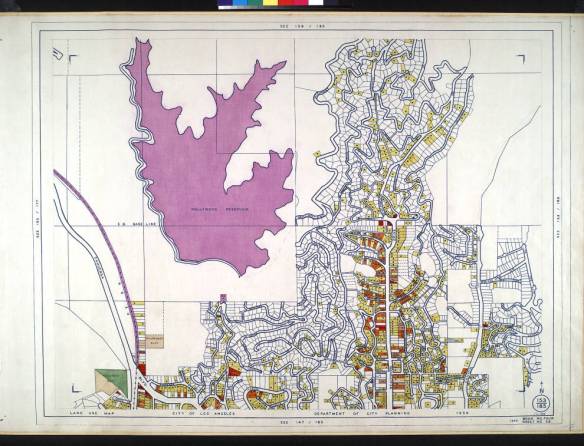
Developed as part of President Franklin D. Roosevelt’s massive package of assistance programs designed to pull the United States out of the Great Depression, the Works Progress Administration (WPA) was known for employing thousands of artists to paint murals in federal buildings and for also employing thousands of the nations’ unemployed in hundreds of massive construction projects around the country.
One of these many programs was also designed to create maps of various locales. The WPA conducted a land use survey from December 18, 1933 to May 8, 1939 for the City of Los Angeles, Department of City Planning. It covered approximately 460 square miles within the boundary of the City of Los Angeles and resulted in a series of 345 hand-colored land use survey maps. They are collected in 10 books (averaging 35 maps per book) each corresponding to a geographic region within the City’s boundary. The books cover:
Each original map measures approximately 2 ft. x 3.5 ft. The maps themselves identify whether land was vacant or used for commercial, farming, residential, industrial, manufacturing, or recreational purposes.
A website, provided by USC, allows users access to the 345 maps. Along with viewing various maps of the different neighborhoods throughout the city, you can search the contents of the maps. Check it out.
Here is an interesting map and article about the spread of the military’s surplus gear in state and local police departments. The data is grouped by county and you can filter by aircraft, armored vehicles, body armor, grenade launchers, night vision, and assault rifles. In LA County there are 3 mine-resistant vehicles … they probably work well with all the potholes around here too!

MaptimeLA is a group of people working on maps, learning about geospatial data, and teaching each other the latest cartographic tools. Check them out and join today. They are also on Twitter.
The History of Cartography Project has been awarded a five-year grant from the National Science Foundation to study the origins and development of modern cartography. The research will facilitate preparation of Cartography in the Nineteenth Century, Volume Five of the groundbreaking History of Cartography series.
This unique, international research and publishing venture, based at the UW-Madison, is dedicated to promoting a deeper understanding of cartography among scholars and the general public. The first three volumes of the series are available in print and are freely available online. The final three volumes will be published in print, as e-books, and online as well.
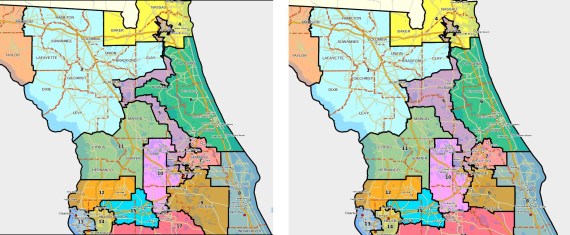
There is a map fight brewing in Florida. Florida legislators completed their hasty fix of a congressional redistricting map in an attempt to address the concerns by Circuit Court Judge Terry Lewis, who said the map violated a constitutional ban on partisan gerrymandering. Click below for a fun read.
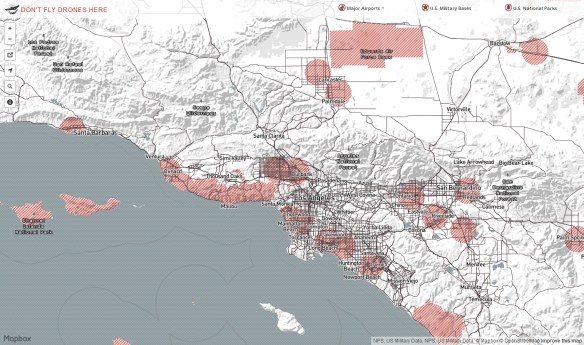
This interactive map represents areas where it is not permitted to fly drones due to current FAA regulations. Brought to you by Mapbox.
This week the US Energy Information Agency announced the availability of a new mapping tool that details the flood risk faced by our existing energy infrastructure. The map has icons located on sites like distribution terminals and power plants and allows users to overlay the existing flood risk on those sites. The clear message is that a lot of our infrastructure is already at risk.
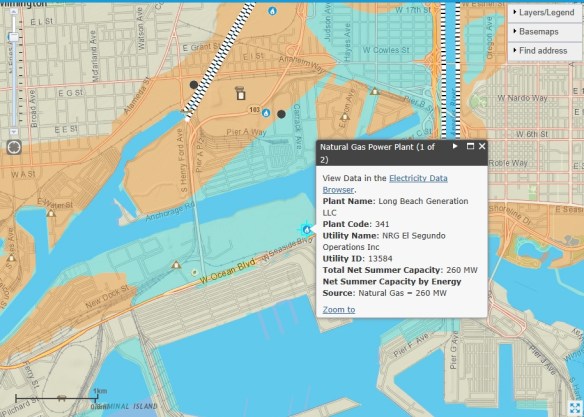
Flood hazard information from FEMA has been combined with EIA’s energy infrastructure layers as a tool to help state, county, city, and private sector planners assess which key energy infrastructure assets are vulnerable to rising sea levels, storm surges, and flash flooding.
Want to know what Yosemite National Park looks like right now? I found this interesting app that takes you on a map tour of our National Parks via live webcams.
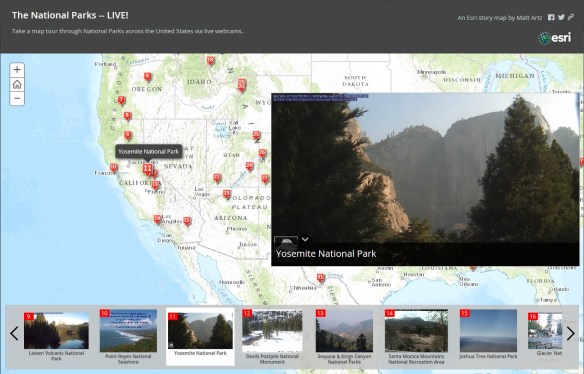
I found some of the webcams not working or displaying an old image, but the ones that do work give a great picture of that area about the time you load the app. I found if you reload the app a few minutes later, those webcams that are working will update their video feed. Pretty cool.
 SoCalGIS.org