Unknown's avatar

About socalgovgis - Michael Carson

Michael Carson, GIS Manager (retired) for the City of Burbank and President of Southern California Government GIS User Group. Currently teaching GIS at College of the Canyons in Santa Clarita.

Spatial Data Analysis with Python

Looking to get into Python for spatial data analysis?  Check out this online video.  The video notes state you will learn about geoprocessing, analyzing and visualizing spatial data using Python and how it compares to other available options such as desktop GIS options (ArcMap or QGIS) or R. The talk will introduce various Python projects such as PySAL, GeoPandas, and Rasterio, and give attendees a starting place for independently exploring and learning geoprocessing skills using Python.

Slides for the video can be found here.
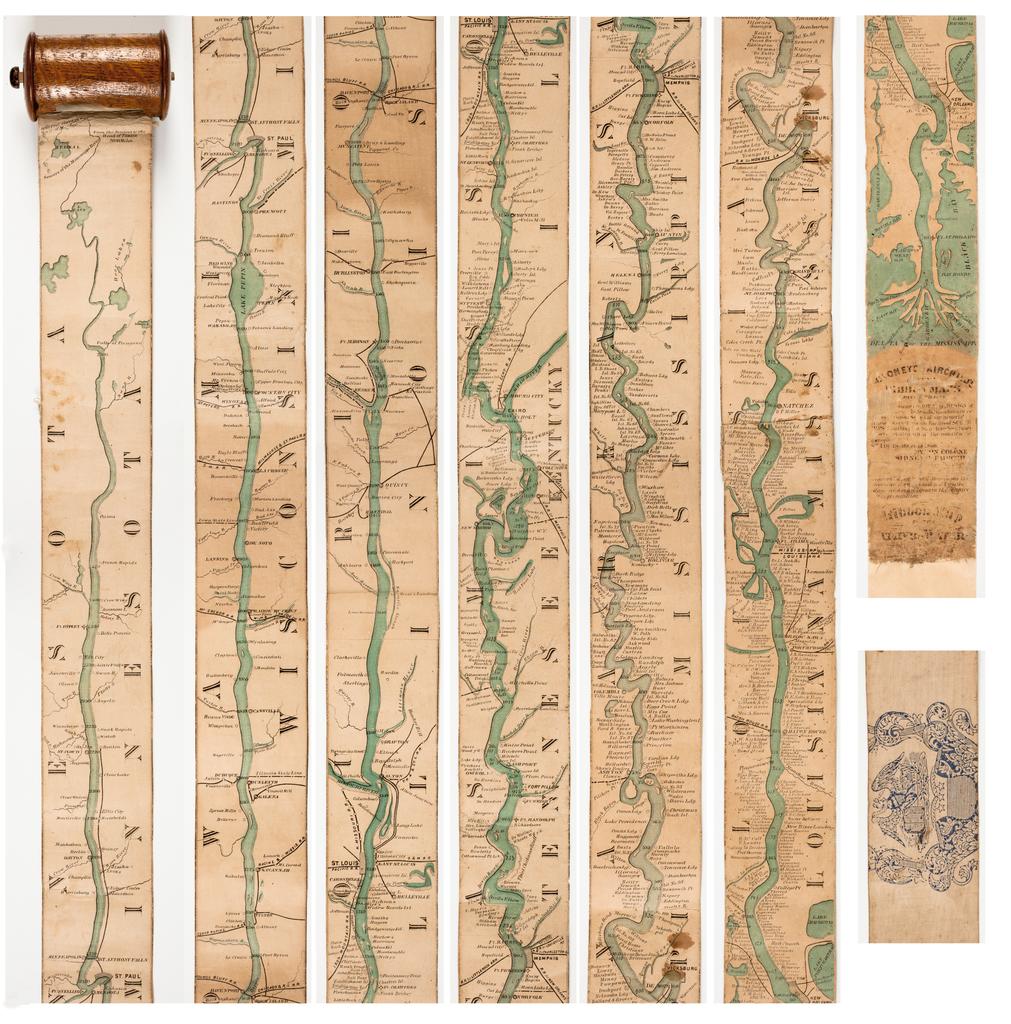
Strip Map of the Father of Waters

I have always liked strip maps.  They go from one point to the other, maybe traversing a very long distance.  The paper map can be very long and show a lot of stuff along the way.  It’s like going on a trip without leaving your chair.

Here is an interesting 1866 strip map of the Mississippi River, allowing you to see the Father of Waters all at once.  It was made for the steamboat traveler at the time and rolled up into a spool.  Check it out and the history behind it.

The Art of Illustrated Maps

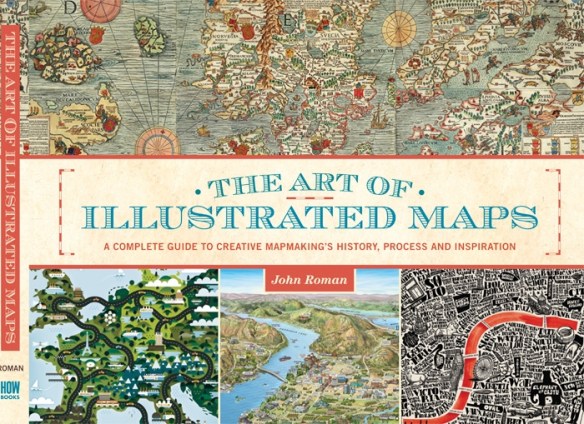
If you are interested in illustrated conceptual maps, want to learn more about creative cartography, or want to see examples from illustrators around the world, The Art of Illustrated Maps by John Roman might be interesting to you. This is the first book ever to fully explore the fascinating world of illustrated conceptual maps.  Check it out!

theartofillustratedmaps

ODOT Workaround for FILESTREAM and Collector

Do you use SQL Server and are thinking about using Collector to store potentially large amounts and data and pictures?  Check out this article.  Experts from the Ohio Department of Transportation provide a detailed workflow example, with step by step instruction, for using FILESTREAM with Collector for ArcGIS to gather, manage and store extremely large datasets in the best ways possible for performance, management and scalability, in line with current industry best practices.

Online Geospatial Courses

You might want to check out some of these online geospatial courses as outlined by Directions Magazine.

Selected Open Online Geospatial Courses

Course Organization Next Offering
Desktop GIS Pace University via Blackboard’s OpenEducation Currently in session
From GPS and Google Maps to Spatial Computing  University of Minnesota via Coursera No future sessions yet scheduled
Geodesign: Change your World Penn State via Coursera No future sessions yet scheduled
Geospatial Intelligence & the Geospatial Revolution Penn State via Coursera February 2016
GIS 101, Introduction to Global Information Systems  SkillsCommons Open, self-paced
Go Places with Spatial Analysis Esri Currently in session
Introduction to Geographical Information Systems University of West Florida via Canvas Network Summer 2016
Maps and the Geospatial Revolution  Penn State via Coursera No future sessions yet scheduled
Mobile Devices for Land Management (in Spanish) UPValencia via edX No future sessions yet scheduled
Open Source GIS SkillsCommons Open, self-paced
QGIS Courses GeoAcademy Open, self-paced
Skills for the Digital Earth  Elmhurst College No future sessions yet scheduled
Spatial Analysis  SkillsCommons Open, self-paced
The Location Advantage Esri November 2015
Various geospatial courses Discover Spatial Open, self-paced

Urban Heat Islands in California

The California Environmental Protection Agency released a study that identifies areas across California experiencing hotter summer temperatures as a byproduct of urban development.

Urban areas have higher temperatures during summer compared with adjacent rural communities, a phenomenon known as the urban heat island. Heat islands are created by a combination of dark pavement and roofs that absorb heat, heat-generating activities such as engines and generators, and the absence of vegetation that provides evaporative cooling.

While the phenomenon is well-known, the study for the first time creates an Urban Heat Island Index (UHII) to quantify the extent and severity of the heat island effect for individual cities throughout the state. The study found temperature increases ranging from a few degrees in small cities and coastal areas to as much as 19 degrees on average over a day in large, inland urban areas.

Click below to read the report on how the Urban Heat Island Index was created and view the maps and data for different urban areas.

urbanheatisland

What is Your Oktoberfest Score?

Are you ready for beer? Fall means Oktoberfest celebrations around the globe, and ESRI has created the Oktoberfest Score app that ranks your community against others in the US. The app uses demographic, consumer spending, and market potential data and lets you explore beer consumption in your area and discover other communities with similar tastes.  Prost!

octoberfestscore