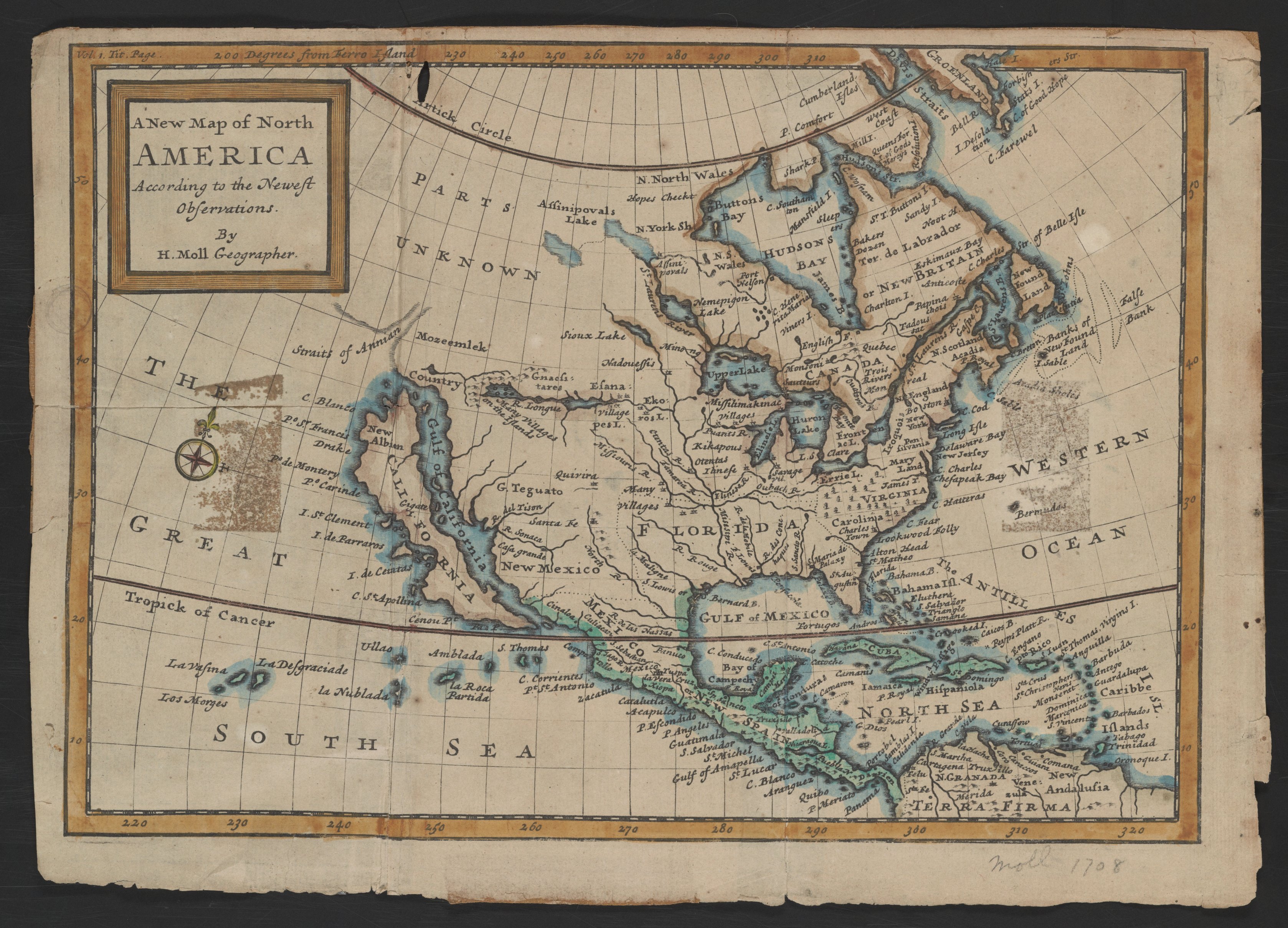
There’s a Call for Papers for a special edition of the International Journal of Undergraduate Research and Creative Activities titled “Geographic Applications in Sustainability: Understanding the Needs, Addressing the Issues”. The editor welcomes any undergraduate paper submission broadly related to sustainability, with a deadline of December 15. More info at http://commons.pacificu.edu/ijurca/call_for_papers.html .
Category Archives: News
Google and San Francisco Launch Real-Time Crisis Map
The online map developed by Google.org displays emergency- and disaster-affected areas of San Francisco.
http://www.govtech.com/public-safety/Google-and-San-Francisco-Launch-Real-Time-Crisis-Map.html
NOAA Announces End of Paper Nautical Charts
NOAA’s Office of Coast Survey, which creates and maintains the nation’s suite of over a thousand nautical charts of U.S. coastal waters, today announced major changes ahead for mariners and others who use nautical charts. Starting April 13, the federal government will no longer print traditional lithographic (paper) nautical charts, but will continue to provide other forms of nautical charts, including print on demand charts and versions for electronic charting systems.
Read the whole article here:
http://www.noaanews.noaa.gov/stories2013/20131022_nauticalcharts.html
Government Shutdown Pains
Here is a list of government websites that are completely offline or “dark” as of last night:
- USGS.gov
- Bureau of Economic Analysis (bea.gov)
- Business.gov
- Census.gov
- Copyright.gov
- Data.gov
- Disability.gov
- ERIC (eric.ed.gov)
- FCC.gov
- FTC.gov
- FTC.gov
- Library of Congress (loc.gov)
- NASA.gov
- National Park Service (nps.gov)
- NIMH.gov
- NIST.gov
- NOAA.gov is offline but you can still get to weather.gov NSF.gov Nutrition.gov USDA (usda.gov)
I find this list of websites interesting. Servers will run without human help for a while! Must be the electric bills? 👿
Sharpen Your GIS Skills Seminar
As a GIS professional, you have to maintain your edge. Esri invites you to hone your tradecraft at the Sharpen Your GIS Skills seminar. This free, half-day event will show you best practices to accomplish your tasks and update your workflows to increase your effectiveness.
Attend this seminar to do the following:
- Learn how and when to use basic to complex analysis tools to drive better decision making
- Find out about the wealth of data, templates, and other resources available for your projects
- Get ideas for extracting more value and better information from your existing software and data
- Increase your knowledge of the latest GIS tools and how you can take advantage of them
- Expand your professional network by meeting Esri staff and others who are using ArcGIS to solve similar challenges
Space is limited. Find the seminar location in your area and register today! NOTE: For those in the SoCal area, there is one on October 1, 2013 in Anaheim.
California as an Island
The Glen McLaughlin Map Collection of California as an Island is now available online. The 731 maps were collected by Glen McLaughlin over a period of 40 years and acquired by Stanford University in 2012. It is the largest known private collection of maps showing California as an island. It is now available for anyone to search, find, view and download via the Stanford University Library’s catalog. Please visit californiaisland.stanford.edu to read more about the collection.
New TIGER/Line Shapefiles & Geodatabases
On Thursday, August 22, 2013, the 2013 TIGER/Line Shapefiles will be released along with a new product, the TIGER Geodatabases.
The TIGER/Line Shapefiles will include a coastline feature starting this year. The coastline was delineated by the Census Bureau in the MAF/TIGER database based on water measurement class for display of statistical information only; its depiction and designation for statistical purposes does not constitute a determination of jurisdictional authority or rights of ownership or entitlement and it is not a legal land description.
The TIGER Geodatabases will include:
- National Edges file (14.5 GB)
- National Roads file (3.6 GB)
- National Blocks file
- National Linear Hydrography file
- National Aeral Hydrography file
- National Sub-State Geography file (includes state, county, incorporated place, census designated place, consolidated city, county subdivision, census tract, and block group geography)
- National Nation-Level Geography file
- National Legislative Areas file
- National School Districts file
- National American Indian Area Related file
- National Rails file
- National Address Ranges file
- State-based files (one per state)
Please direct questions to GEO.TIGER@census.gov or (301) 763-1128.
Bureau of Transportation Statistics Webinar
Introducing BTS’ Geographic Information Services, Thursday, August 22, 2013, 1:30pm to 2:30pm (Eastern Time), http://www.bts.gov/programs/webinars/ . BTS GIS Team member Derald Dudley will be presenting details about issues surrounding BTS’s Web Mapping development, the latest functionality of current web mapping applications, and applications under development. Mr. Dudley will also talk about other efforts, by the BTS GIS Team, to further GIS within the US DOT.
Mr. Dudley has a bachelor’s degree in Geography from Towson University, a master’s degree in Computer Science from Hood College, was a Cartographer with the Marine Chart Division at NOAA from 1996 to 2001, and has been a Geographer with BTS from 2001 to the present. His Presentation will provide information about Windows Foundation Services, REST Services, the Structurally Deficient Bridges application, the State Facts application, and future efforts.
To participate in the webinar, please visit http://fhwa.adobeconnect.com/actsmeeting/ and click on “Enter as Guest”, type your name, and enter the room. A 1-800 number will be provided on the website. Please make requests for special accommodations at least 3 days in advance. Webinar is closed captioned. For more information, contact RITAInfo@dot.gov or 1-800-853-1351.
Before accessing the webinar check your computer for compatibility by clicking on the link: https://admin.acrobat.com/common/help/en/support/meeting_test.htm .
The Longitude Problem
Many of us use our global coordinate system everyday. Latitude and longitude are here for us to pinpoint our location on earth. However, there was a time when latitude and longitude were not around … someone had to invent them. Latitude came first, however, longitude was more difficult to determine. Longitude was the conundrum that baffled some of the greatest and most eccentric experts of the 18th century – and captivated the British public during an era of unprecedented scientific and technical transformation.
In July 1714 an act of British parliament established a £20,000 prize, worth about £1.5 million today (2.3 million US), for the discovery of longitude at sea: determining a ship’s position east and west from a fixed meridian line.
Cambridge historian Professor Simon Schaffer said: “The problem of longitude could be a lethal one. The act of parliament established the Board of Longitude – think the X Factor, only much more money and much more important – that would reward anyone who could solve the problem of longitude. The longitude story is a spectacular example of expert disagreement and public participation. As well as attracting the greatest scientific minds of the day, the board enticed people who belong to one of the most important traditions in British society; the extreme eccentric.”
Now, for the first time, the full story of attempts to solve the longitude problem – unravelling the lone genius myth popularised in film and literature – will be made freely available to everyone via Cambridge University’s Digital Library. Here is a brief introduction to the Board of Longitude:
Treasures of the Longitude archive, available to view in high-resolution for the first time, include accounts of bitter rivalries, wild proposals and first encounters between Europeans and Pacific peoples. This includes logbooks of Captain Cook’s voyages of discovery, the naming of Australia and even a letter from Captain Bligh of HMS Bounty, who writes to apologise for the loss of a timekeeper after his ship was ‘pirated from my command’.
The hugely significant archive preserves detailed minutes from the first recorded meeting in 1737 right through to the Board of Longitude’s dissolution in 1828.
As the schemes for longitude needed to be tested on long voyages, the archive includes much detail on Britain’s maritime interests, explorations and encounters with other cultures. It also played a major role in plans for voyages by James Cook and successors into the Pacific in the 1770s – and into the Arctic in the opening decades of the 19th century. The archive includes four eyewitness accounts of Cook’s Second Voyage and contains the first Western maps and descriptions of many Pacific places and peoples.
The Board’s work continued long after longitude was effectively solved and its many interests and long duration makes the archive a hugely important primary source on the development of science and technology in the 18th and early 19th centuries. It also provides valuable insight into the social history of the era with thousands of names featuring in its files; from Isaac Newton, to eccentric inventors who berated the Board for not following up on their ideas.
Indeed, the archive contains two volumes of ‘impractical’ schemes submitted in the hope of finding a reward. They were later bound and prefaced with title pages such as ‘wild proposals resulting from dreams’. They came via a diverse cross-section of society, from prisoners seeking release in return for their ‘solutions’ to citizens like Mr William Lester, who proposed solar experiments to find longitude that involved igniting points on a globe with a lens. The board underlined his statement that if the globe is correct and properly adjusted ‘you will set fire to London’.
The Longitude collection has much to tell us about the effects of scientific discovery on society and many of its themes and concerns are still relevant today.
… Something to think about while you Google your next address!

2013 ESRI Conference Technical Workshops
Did you miss a few technical workshops at the 2013 ESRI International User Conference? Good news, there are many to watch now on ESRI’s video site. Check it out!