A funny one from xkcd.com:

If you go to the site and hover over the map, a popup will tell you the actual top search word used in every state … except Florida!

Looking for a unique map gift? How about a textile map from this Wisconsin textile artist? Check it out!

Looking to do a little prediction mapping using logistic regression in ArcGIS and the R environment … I thought so! This stuff makes my head ache, however if you are interested there is a series of videos that will step you through it. Check it out!

Also, check out this article about ESRI and R support.
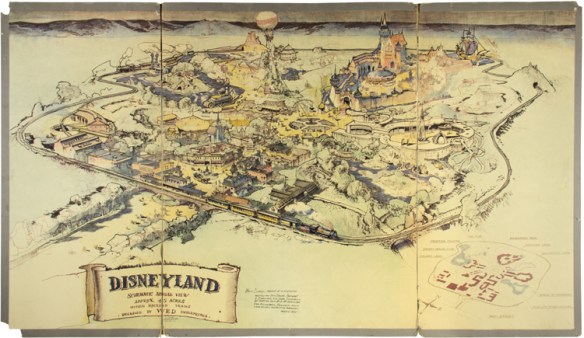
Have some extra cash? Maybe you would be interested in placing a bid for this original map of Disneyland, co-created by Walt Disney himself when the park was still in the inception phase. The map helped Walt and his brother Roy sell the park idea and make it a reality in Anaheim. For more info of the story and where the auction will be held, click below … and good luck!
And if you don’t have that kind of cash, maybe you would settle for this book instead? It’s a good one.

The book opens up from the middle, which is cool. For a look inside, check out this video.
For the past several centuries, cartographers have tried to find different ways to portray the globe on a two-dimensional map. Many of these attempts, including the Mercator projection, distort the true size of different countries and regions. As a result, many of us have false perceptions about the proportional size of different geographical areas.
Looking for unusual maps? Check out this website that makes available to the public a collection of more than 800 examples of persuasive cartography, maps intended primarily to influence opinions or beliefs – to send a message – rather than to communicate geographic information. You can search for maps by subject and there are also links to download the high resolution image of each map.

Are you looking for nautical charts? NOAA’s paper nautical charts are available as “print on demand” up to date to the time of purchase. You can also download charts in PDF format for free.
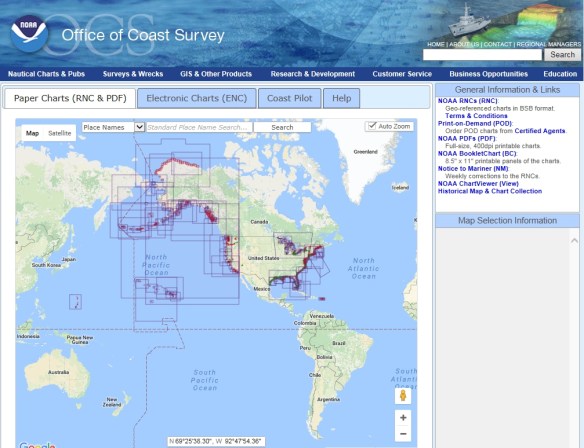
Looking for open ocean and international waters charts? They are produced by the National Geospatial-Intelligence Agency (NGA) and available through vendors as “print on demand” products.
During the second half of the nineteenth century, the introduction of the post office changed daily life in the Western United States. Over the course of 50 years, the number of post offices in this region expanded from just a handful to several hundred. Some post offices were established and stayed in operation long term; others had much shorter life spans as the west continued to change.
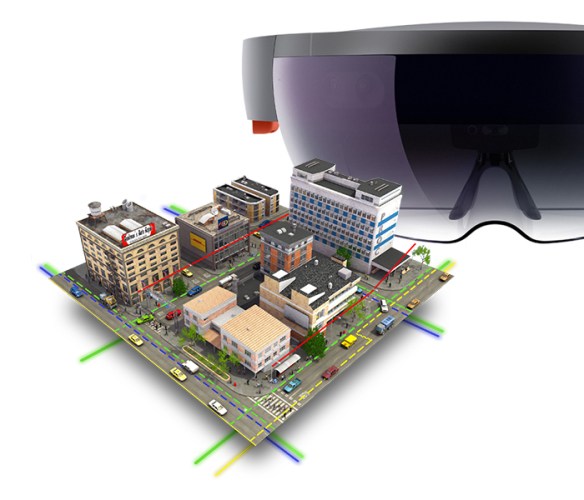
Toms River Municipal Utilities Authority (TRMUA) became the first entity in the world to deploy holographic technology in support of its field teams doing utility location work. Read the article by clicking below.
Are you into creating your own projections? Try out Flex Projector. Flex Projector is a freeware application that allows you to easily modify dozens of world map projections. It is intended as a tool for practicing mapmakers and students of cartography. Check it out!

 SoCalGIS.org