For Valentine’s Day this year, enjoy this old world map in a double cordiform map projection. Published by Antonio Lafreri, c. 1564.
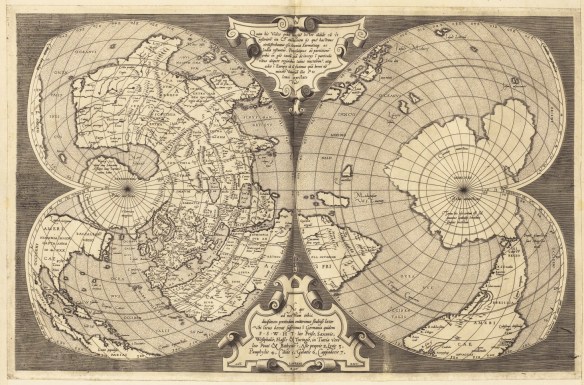

For Valentine’s Day this year, enjoy this old world map in a double cordiform map projection. Published by Antonio Lafreri, c. 1564.
Most of us using GIS today do not get to do much mapping of whales, but back in the mid 19th century the American whaling trade was big business and you needed to know where the whales were.
Check out this innovative map from 1851 showing the distribution of several different species of whales, identifying each with a combination of color and pictorial symbols. The map shows at that time that the Pacific Ocean was the primary habitat for whales. The Atlantic Ocean was not because the whale resources there had been terribly depleted. Check it out!

Is the risk of wildfires increasing where you live? Check out this article about analyzing US Forest Service data and the threat of fire breaking out in areas that would be difficult to contain.

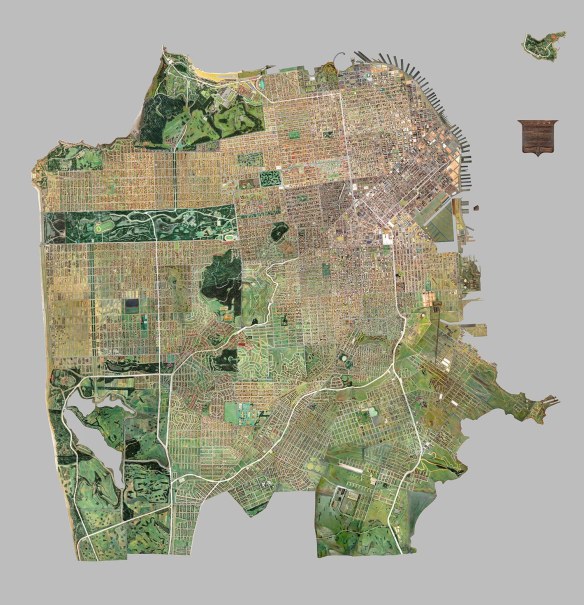
Found this interesting digital map of San Francisco in the David Rumsey Map Collection. It was a massive wooden model of San Francisco that has not been on display in one piece since 1942. The 158 pieces that create a 42×38 foot model of the city were digitally photographed and pieced together to create one big mosaic image. The model represented the city as it was in 1940. Check it out!
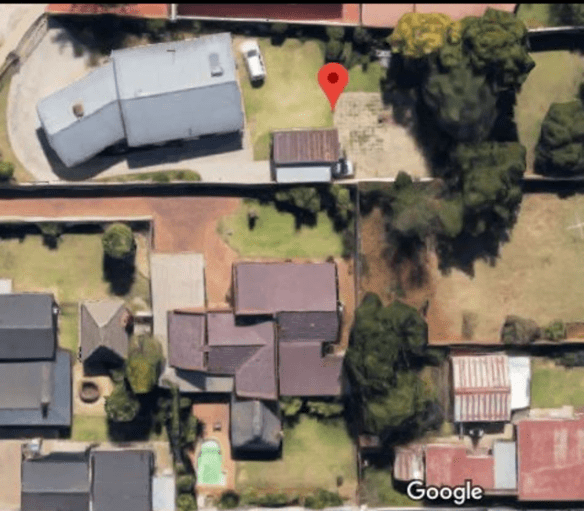
Many of us that create GIS data and share with others have no idea of the unintended consequences that the data might produce. Using data and ignoring the scale, resolution, accuracy, and where it came from might produce very wrong results.
Click below to read this rather long story about how location data married with IP addresses is causing a horror show for a couple in South Africa, and this is not the only case.
From NFL Memes, who America is rooting for in the Super Bowl:

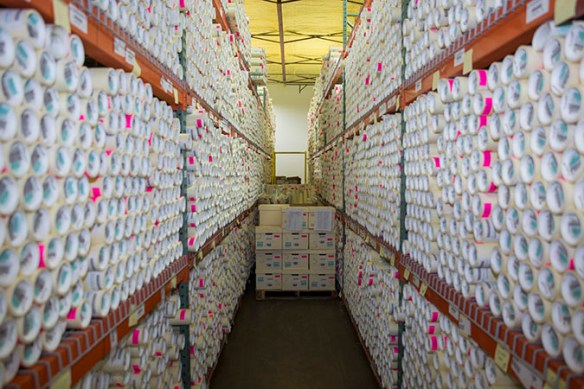
The product of 400 different railroads, Burlington Northern Santa Fe (BNSF) is using GIS to convert all their paper maps collected over 170 years into digital information. Click below to read all about it.
Quantitative map literacy can be seen as a cross between map literacy and quantitative literacy. Quantitative map literacy includes the concepts and skills required to accurately read, use, interpret, and understand the quantitative information embedded in a geospatial representation of data on a geographic background.
To learn more, check out this interesting journal article about Quantitative Map Literacy.
Have a few minutes to spare before your next task? Open Google Maps and turn on the satellite imagery. Now zoom all the way out until you see Earth and listed on the left are planets, moons, and other objects you can zoom to and check out. See you in an hour!

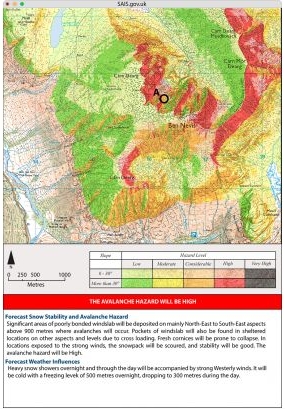
SoCal does not experience avalanches very often. Since 1950, at least 64 people have died in avalanches in California with 9 of those in SoCal, according to this article.
Snow avalanches can cause a significant loss of life. As a naturally occurring disaster they are unique in nature, usually being highly localized events, and often in remote areas. Their victims are often voluntarily at risk for recreation purposes and become the trigger of their own avalanche.
Avalanche forecasting seeks to safeguard recreationists in winter mountain environments using risk based decision making. Avalanche experts interpret the spatial and temporal distribution of hazards and abstractly present these in the form of a forecast. Recreationists can then use them for planning excursions into avalanche prone terrain and avoid high risk slopes that pose a hazard.
Check out this article on how Scotland looked at using GIS to make cartographic visualizations of predicted avalanche danger areas.