Say Bye Bye to US Survey Foot

I remember 30 years ago working on ESRI’s COGO software. If you ever used it back in the day, you were a hero creating a landbase from scratch with only measurements from tract and parcel maps and making sure everything closed well with your traverses.

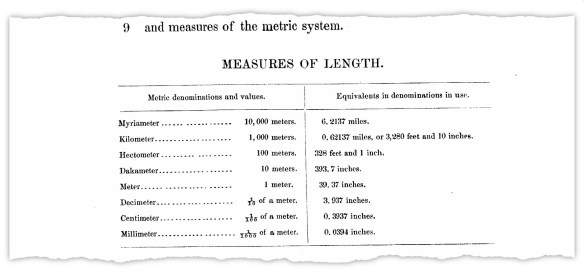
One thing I found interesting was there were two definitions for measuring 1 foot. There was the international foot, which was defined as 1 inch = 2.54 centimeters exactly, or 1 foot = 0.3048 meters exactly. The other was the older US survey foot, which was defined as 39.37 inches = 1 meter exactly, or 1 foot = approximately 0.304800609601 meters, or multiplying US survey feet by the fraction 1200/3937 to get meters.

The US survey foot has been around since 1893 while the international foot was established in 1959 and is slightly more exact. One of the reasons we retained the US survey foot was because of our state plane coordinate systems, which were derived from the national geodetic control network, and are based on the relationship of 1 meter equaling 39.37 inches exactly. Fundamental survey units, such as rods, chains, statute miles, acres, sections, and townships, all depend on the relationship of 1 meter equaling 39.37 inches exactly.

Using two measurements for the same unit have been confusing over the years. But now the US survey foot will be obsolete by January 1, 2023. Click below to read more about it!
ussurveyfoot

Mapping Government Spending

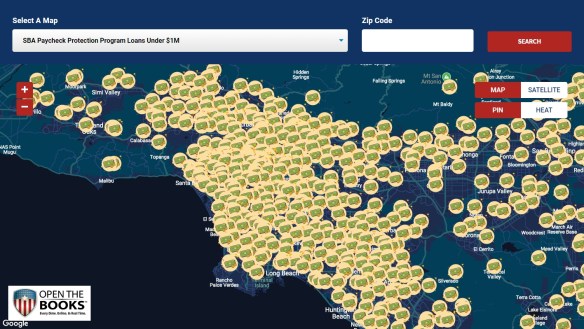
Wondering what companies took the government’s SBA Paycheck Protection Program loan?  How about what government agencies received Federal Weapons that were loaned to them?  How about who received Federal Grants?  Or what colleges received Coronavirus Bailout Money?  You can find all this out at Open The Books.  They have mapping applications that allow you to zoom in on your town/county/state to see the data.  Check it out!

openthebooks

Huntington Digital Map Collection

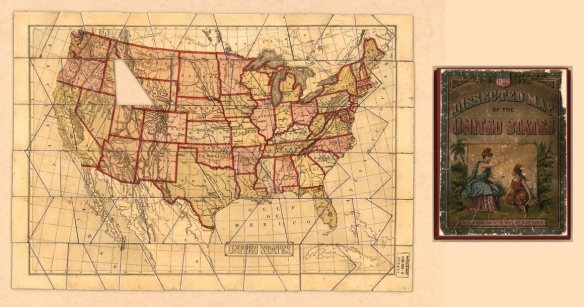
The Huntington Digital Map Collection is an internet catalog of over 8,000 maps of California and the World from The Huntington Library, Art Collection & Botanical Gardens.  The maps range from 16th century European portolan charts to 20th century land use maps, including maps owned by British explorer Sir Richard Burton; the Solano-Reeve collection of surveys of Los Angeles and Southern California tracts; and printed tract maps from the Rare Book Collection.  You can see all of the available maps in the Huntington collection with thumbnails and short descriptions so you can easily choose the ones you want to view more fully.  Check it out!

skaggsranche

EarthSky Stargazing

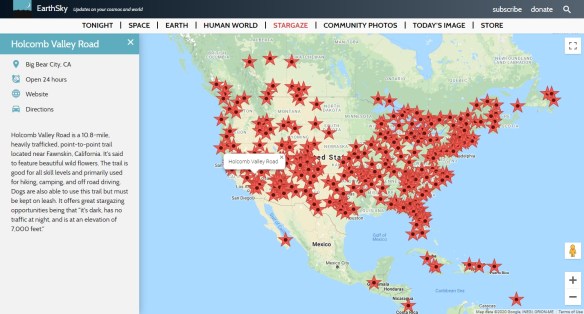
EarthSky’s interactive map will help you find the perfect spot to celebrate the summer nights as you look skyword.  This resource tracks publicly accessible stargazing spots around the world.  The site gathers an impressive array of locations.  Visitors will find a world map with pins marking spots of interest.  Click on a pin to reveal an address, directions, and a brief description.  Do you have a favorite spot of your own that you want to share?  The “Recommend a Place” button brings you to a submission form.  Check it out!

earthsky

Forest Inventory & Analysis Factsheet

If you are interested in exploring forestry statistics in your home state, you might enjoy the Forestry Inventory & Analysis Factsheet.  The resource provides “a brief overview of forest resources in each state based on an inventory conducted by the FIA program in cooperation with each State forestry agency.”  Factsheets were created using data from the USDA Forest Service’s Forest Inventory and Analysis database.  To explore the data, toggle over the map and click on a state, or use the dropdown bar in the lower left-hand corner to select a state from the alphabetized list.  Check it out!

foreststats

Weather Spark

Are you a weather fanatic?  If you don’t know about Weather Spark, you should check it out.  It is a wonderful website that offers detailed summaries of typical weather anywhere on Earth.  From the home page, you are invited to enter a location in the search bar or to choose among major cities, and you can also search via an interactive map (linked below the city list) or view a randomly selected place. Each location in Weather Spark’s database has a vast amount of information concisely presented through colorful graphics and text descriptions, including average temperatures, humidity, solar energy, and much more, with reports available for a yearly, monthly, or daily time frame. You can also compare the average weather for multiple locations simultaneously. Check it out!

weatherspark

USGS First Complete Geologic Map of the Moon

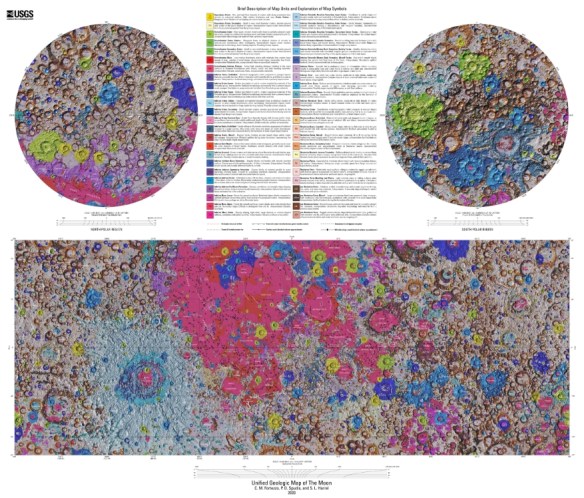
The USGS has released the first unified geologic map of the moon.  This new work represents a seamless, globally consistent, 1:5,000,000-scale geologic map derived from the six digitally renovated geologic maps. The goal of this project was to create a digital resource for science research and analysis, future geologic mapping efforts, be it local-, regional-, or global-scale products, and as a resource for the educators and the public interested in lunar geology.  Click below to check it out!

moongeologicmap

US Census Knowledge Quiz

What role do postal carriers play in census preparations? What new response category will be featured on this year’s census form? Test your Census expertise on these questions and more with the Pew Research Center’s U.S. Census Knowledge Quiz. The 12-question quiz covers the history, purpose, and changes to the U.S. Census and provides test-takers with answers and explanations immediately following their attempt.

Readers who are displeased with their results may want to sign up for the Pew Research Center’s “short email mini course” on the U.S. Census (accessible by clicking the linked text “email mini-course”). This free course is divided into five sections including “What is the census and why is it taken?” and “What is new and possibly challenging about the 2020 census?” Enrolled users will receive “an email with a lesson every few days,” allowing for a manageable way to better understand why this data collection process is so important.

If you are stuck at home with kids right now, a great teaching tool too!  Check it out by clicking here.

Also check out the Census Historical Timeline.  AND check out the 1940 Census website.  You can search for images of the pages people signed.  I was able to find my Grandparents who also listed my father and his sister when they were children, pretty cool!