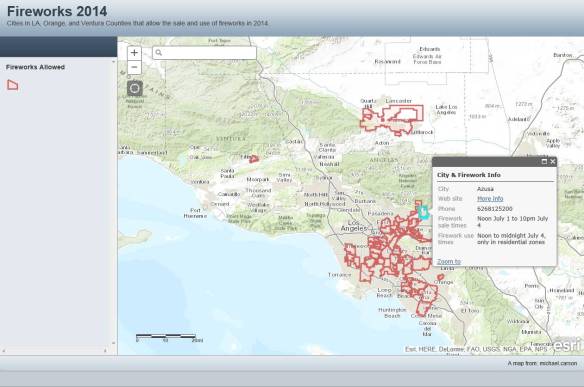
It’s that time again … Fireworks! This year the fireworks app has been expanded to include cities in Orange County and Ventura County. Included are days and times when fireworks will be sold and when you can light them up, as well as links to city web sites and telephone numbers. Data was collected from municipal codes and/or contacting each city. Enjoy!
Category Archives: Fun Stuff
When LA Was Empty: Wide-Open SoCal Landscapes
Found this great article about early Los Angeles and how our busy neighborhoods and street intersections of today were once wide-open spaces and dirt roads. Below is a picture of Highland Ave north of Hollywood Blvd in 1906. Click on it to view more!
While you are at it, check out the lost towns of LA as well:
USGS Map Engravings Available for Transfer, Donation, or Sale
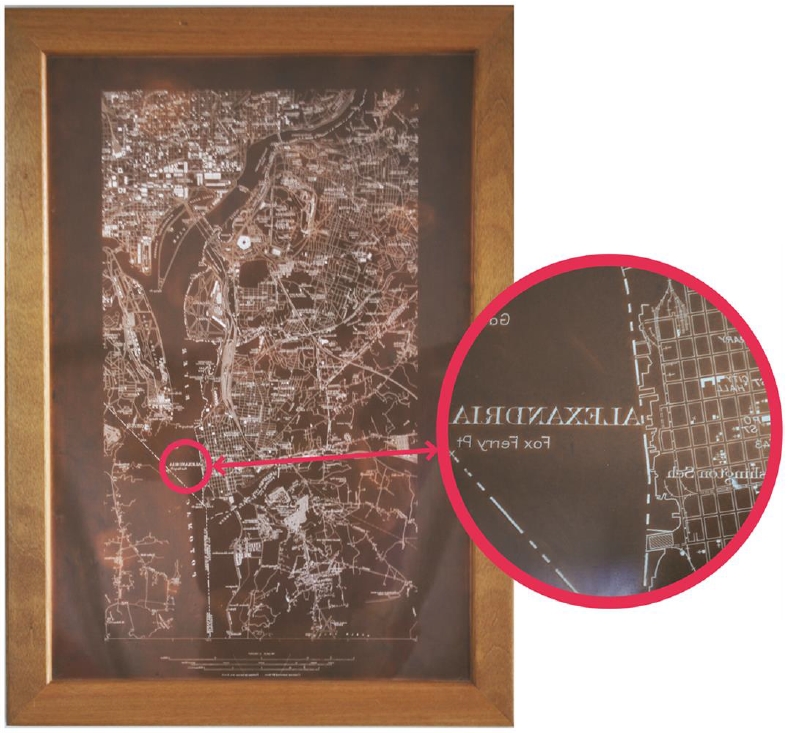
Beginning this summer the Federal Government will release excess engravings once used to reproduce U.S. Geological Survey (USGS) topographic and geologic maps and other scientific illustrations.
The process makes these unique engravings, created from the 1880s to the 1950s, available for transfer to Federal agencies; for donation to State and local governments, certain non-profit educational and other organizations, and public agencies; and for sale to the public.
Those interested in obtaining engravings need to understand the phases of the process; know how to request the engravings; plan the logistics to receive, pack, load, and transport them; and be ready to request a donation or to make a purchase offer when the engravings become available.
More information about the engravings and the process for transfer, donation, or sales of the engravings is available through ftp://ftpext.usgs.gov/pub/er/va/reston/Engravings/.
State and local governments, certain non-profit educational and other organizations, and public agencies interested in receiving a donation should establish their eligibility now with their State Agency for Surplus Property (SASP). The SASPs are listed at http://www.gsa.gov/portal/content/100851. Only the SASP can request a donation on your behalf.
The engravings will be available through a process managed by the U.S. General Services Administration (GSA).
USGS will post supporting status information weekly through ftp://ftpext.usgs.gov/pub/er/va/reston/Engravings/.
Nature Soundmap
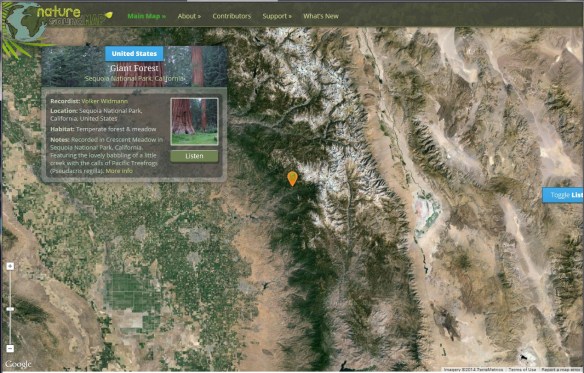
What does a humpback whale sound like? Or perhaps the White-cheeked Gibbon? The Nature Soundmap provides snippets of these sounds and much, much more. Visitors will find an interactive map of the world, complete with markers that allow audio wildlife travel from Central America to Central Asia. Symphonies of animal noises can also be found here. Each marker includes information about the animal or setting profiled, along with a link to More Info for the generally curious. Click below to check it out.
Time-lapse LA
I found this great video of time-lapse photography in and around Los Angeles at night.
Note that in most of the shots the camera is also moving while the time-lapse shots are taken, which makes for a great effect. It’s best to watch the full HD version here and read about the photographer and his projects. Here are the other two:
Spy Satellite Images Unveil Lost Cities
The Program
During the cold war, there was a spy satellite program called Corona. The Corona program was a series of American strategic reconnaissance satellites produced and operated by the Central Intelligence Agency Directorate of Science & Technology with substantial assistance from the US Air Force. The Corona satellites were used for photographic surveillance of the Soviet Union (USSR), the People’s Republic of China, and other areas beginning in June 1959 and ending in May 1972. The name “Corona” was a code name, not an acronym.
The Technology Behind the Photos
During the program, there were 144 satellites launched, of which 102 returned usable photographs. The satellites orbited at altitudes of 100 miles above the Earth, with later missions orbiting even lower at 75 miles.

The satellites used special 70mm film with a 24 inch focal length camera manufactured by Eastman Kodak. The film was 0.0003 inches thick, with a resolution of 170 lines per 0.04 inches of film. The amount of film carried by the satellites varied from 8,000 feet for each camera to 16,000 feet. Most of the film shot was black and white.
So how did we get the film back? This is the cool part! The film was retrieved from orbit via a reentry capsule (nicknamed “film bucket“). Exposed film would be stored in the capsule, and when ready would then be ejected from the satellite to fall to earth. After the fierce heat of reentry was over, the heat shield surrounding the capsule was jettisoned at 60,000 feet and parachutes were deployed to slow the rate of descent. The capsule was then caught in mid-air by a passing airplane towing an airborne claw which would then winch it aboard!

The capsules were also designed for landing in the ocean. A salt plug in the base would dissolve after two days, allowing the capsule to sink if it was not picked up by the US Navy. On occasion the capsules landed by accident on land, which prompted the removal of the word “Secret” stamped on the capsule and replaced with words in eight languages offering a reward for their return to the United States. Hmm … I wonder if that worked? The film was processed at Eastman Kodak’s Hawkeye facility in Rochester, New York.
Here is a video about the Corona program. And here is an old calibration target used by the Corona satellites near Casa Grande, Arizona.
The Images
In 1995, President Clinton declassified 800,000 photographs from the Corona project in order to make them available for environmental and historical research. Archaeologists working in the Near East have been quick to embrace this newly available resource, which capture images of sites and landscapes in the 1960’s. Research into ancient landscapes at Harvard has used these images to investigate the communication networks of the Early Bronze Age, state-sponsored irrigation under the Assyrian and Sasanian empires, and pastoral nomadic landscapes in northwestern Iran and southeastern Turkey.
For archaeology, Corona photographs have two tremendous advantages over other space-based imagery sources. Many rural parts of the Near East have escaped agricultural development and urban growth until recent decades, when many have been damaged or destroyed. Corona photographs predate this destructive development and thus preserve a record of landscapes that are difficult or impossible to map on the ground. Corona images were made before cities such as Mosul in Iraq and Amman in Jordan overran the many archaeological sites near them. Dams have also flooded river valleys, covering many other archaeological sites. As cities grew, the industrial farming and irrigation that supported them grew too, obscuring roads and sites clearly visible in the Corona images. More recent commercial sensors such as Ikonos and QuickBird have a higher resolution, but they capture the modern damaged landscape of today.
Corona photographs are also of high resolution, capable of displaying features as small as 2 meters in ideal conditions. Many features visible in Corona cannot be seen in medium resolution satellites such as Landsat (30 m) or ASTER (15 m).
Recently, a team from Arkansas’s Center for Advanced Spatial Technologies have built a free, public tool to explore the Corona images of the Middle East.
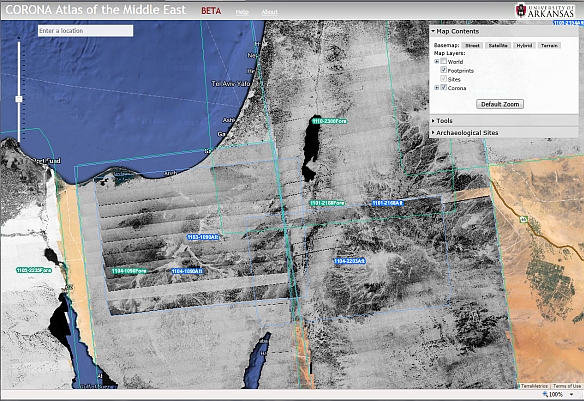
The team plans on adding more images from Corona, such as areas of Russia and China.
Mapping Millions of Runs and Rides
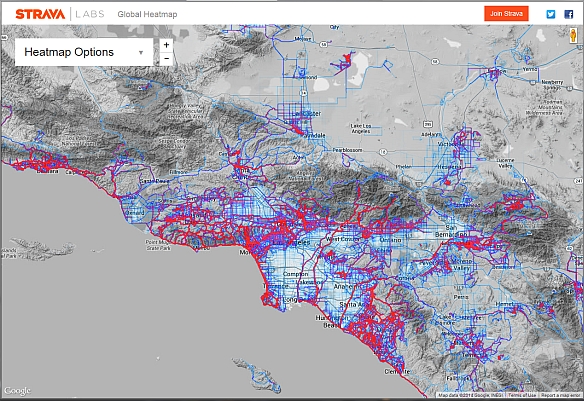
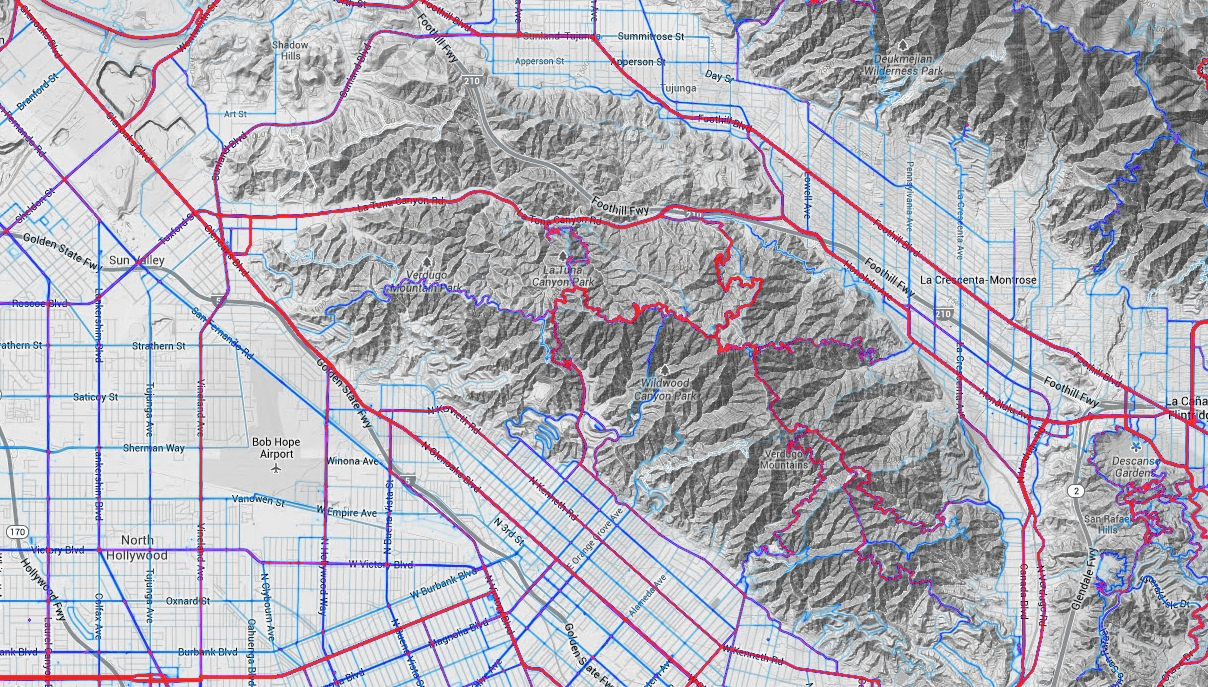
Strava, which provides an app for you to track your rides and runs via your iPhone, Android or dedicated GPS device, has released an interactive global heat map showing logs of 77,688,848 rides and 19,660,163 runs. The heat map draws from about 220 billion data points and provides a detailed picture of where people bike and run. Below is the LA area, but you can zoom out to view the world.
Popular routes are in red, moderate in dark blue, and less traveled in light blue. You can view biking or running separately or together, change the path opacity, and also change the heat map style.
If you are a planner looking to establish new bike paths and trails, this information could be gold for you!
Territorial Evolution of the United States
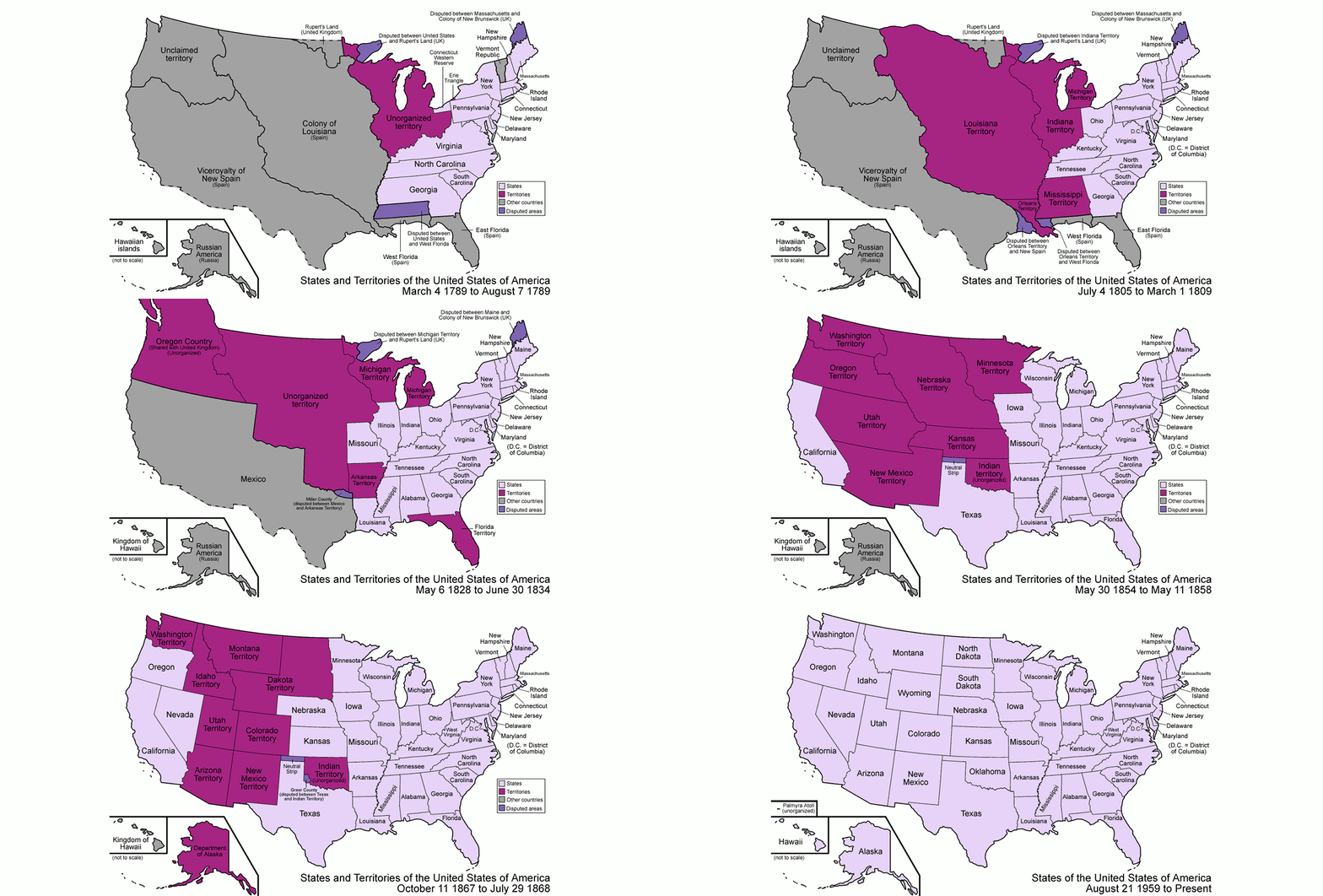
I found this interesting animated image showing the evolution of the borders of the United States. Click on it to view larger.
For more information about the history of our state borders, see this site. Or even better, check out this book. It was a great read, very interesting.
Or, you can watch the videos here!
Port of LA/Long Beach on Skybox
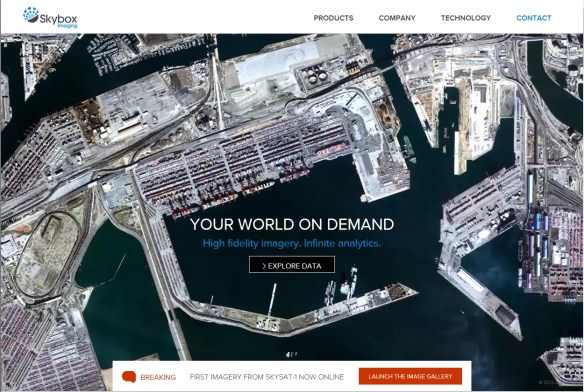
I noticed on the home page of Skybox Imaging’s site, they feature images of a portion of Port of LA and Port of Long Beach. The demo zooms to different locations and explores the imagery data.
Also check out one of their satellite HD Videos of Burj Khalifa on April 9, 2014. The shadow of the world’s tallest building (more than half a mile high) is most impressive! I also like the jet that flys by and the traffic moving on the highway.
Very cool! You can view it larger here. And more of their videos here.
Tax Freedom Day 2014
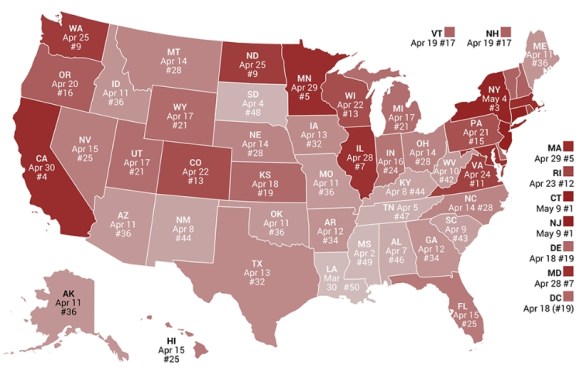
In the spirit of April 15th, tax day in the US, remember Tax Freedom Day too. This year Tax Freedom Day falls on April 21st, three days later than last year.
Tax Freedom Day is the day when the nation as a whole has earned enough money to pay its total tax bill for the year. We all work over 3 months for the government each year! Click below to see a calendar-based illustration and map of the cost of government.
In California, our Tax Freedom Day falls on April 30th. California ranks #4.