Unknown's avatar

About socalgovgis - Michael Carson

Michael Carson, GIS Manager (retired) for the City of Burbank and President of Southern California Government GIS User Group. Currently teaching GIS at College of the Canyons in Santa Clarita.

GIS Courses at Rio Hondo College

Rio Hondo College GIS courses start the week of January 26th. Registration is open. GIS classes are on campus and an Intermediate GIS course on location at the LA County Department of Public Works (900 S Fremont Ave, Alhambra). A Geospatial Programming (Python) & Web Services class (GIS280) is also offered on Tuesday evening.

A list of GIS classes can be found here under heading Learn GIS. Fees are $46/unit and some classes can be used to transfer to CSU, CGU, CSULB & others. Steps for applying for admission and registering for the classes can be found here and can be performed entirely online with no fees. Applying for admission however should be done early to provide you the option to registering without delay as classes can fill quick.

Please contact Professor Warren Roberts at wroberts@riohondo.edu for inquiries about waivers needed for prerequisites and corequisites or any other info that you would like to ask.

Moving To PostgreSQL (Part 2)

Welcome back!  Last time in Part 1 we installed PostgresSQL on a Linux server.  Now we need to do a few things to get it ready so we can create an Enterprise Geodatabase in it.

Postgres User

When PostgreSQL was installed, a postgres user was created.  The postgres user is the default “superuser” to the PostgreSQL database.  Right now the postgres user password is unknown to you.  You must change it in Linux and in the PostgreSQL database.

Log back in to the Linux server and at the Linux prompt, use the passwd command to change the postgres user password.  You might need to use the sudo command with it for it to work.  Continue reading

Quantitative Map Literacy

Quantitative map literacy can be seen as a cross between map literacy and quantitative literacy.  Quantitative map literacy includes the concepts and skills required to accurately read, use, interpret, and understand the quantitative information embedded in a geospatial representation of data on a geographic background.

To learn more, check out this interesting journal article about Quantitative Map Literacy.

Moving To PostgreSQL (Part 1)

Goodbye Oracle, hello PostgreSQL!  I’ve decided to get out of the Oracle business and move our Enterprise Geodatabase to PostgreSQL.  I’m tired of giving Oracle lots of money each year.  PostgreSQL is open source and it is very mature.  Though we do not have a dedicated DBA here that knows PostgreSQL, they can learn!  And so can I.  Besides, ESRI supports it and if something goes wrong, I can get them on the red hotline phone!

Over the past few years, I have been testing PostgreSQL on Windows by installing it with our ArcGIS Server installations and using it to store GIS data used in our map and feature services.  I have had only one issue and it was a speed problem when selecting over 10,000 polygons in ArcMap.  ESRI confirmed it was a bug.  I believe that problem has gone away, so now is a good time to move to PostgreSQL.  But just to be sure, we will be running both Oracle and PostgreSQL in parallel for a few months.

NOTE: To be able to install an Enterprise Geodatabase in PostgreSQL, you must be running ArcGIS Server (enterprise addition) somewhere.  You need the keycodes file that was created with it to authorize the geodatabase.  You will also need the st_geometry.so file that was created when you installed ArcGIS Desktop 10.6.  More on that later.  Continue reading

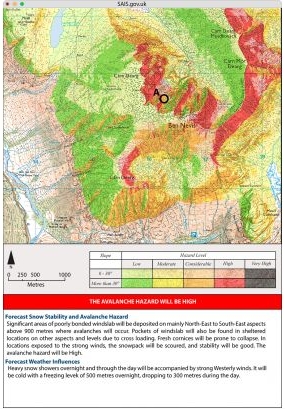
Avalanche Forecasts Using GIS

SoCal does not experience avalanches very often.  Since 1950, at least 64 people have died in avalanches in California with 9 of those in SoCal, according to this article.

Snow avalanches can cause a significant loss of life. As a naturally occurring disaster they are unique in nature, usually being highly localized events, and often in remote areas. Their victims are often voluntarily at risk for recreation purposes and become the trigger of their own avalanche.

Avalanche forecasting seeks to safeguard recreationists in winter mountain environments using risk based decision making.  Avalanche experts interpret the spatial and temporal distribution of hazards and abstractly present these in the form of a forecast.  Recreationists can then use them for planning excursions into avalanche prone terrain and avoid high risk slopes that pose a hazard.

Check out this article on how Scotland looked at using GIS to make cartographic visualizations of predicted avalanche danger areas.

avalanches

The First Weather Map

Sir Francis Galton was the first to identify the anticyclone (as opposed to the cyclone), and introduced the use of charts showing areas of similar air pressure – the modern weather map.  His book Meteorographica was the first systematic attempt to gather, chart and interpret weather data on a continental scale, a fundamental work of modern scientific meteorology.

Galton prepared the first weather map published in the British newspaper The Times (April 1 1875, showing the weather from the previous day, March 31), now a standard feature in newspapers worldwide.  Click below to read more about Sir Francis Galton.

times-1875-apr01-012-f-first-weather-map