Death Valley’s Moving Rocks

For at least a century, the moving rocks of Death Valley have presented a puzzle, and researchers have been trying to solve it since 1948.  The rocks, some of them boulders weighing more than 600 pounds, show signs of movement across the desert floor by leaving long trails behind them.

Explanations including dust devils, flooding, hurricane-strength winds, and even UFOs have been offered, but the mystery was finally solved when researchers caught the rocks in the act!

Check out the National Geographic article and watch the video below.

USGS Earthquake 101

The U.S. Geological Survey will host an educational event for the news media focused on earthquakes on Wednesday September 24, 2014. The goal of the event is to provide the press an opportunity to work with USGS staff to build knowledge about and confidence in the information delivery systems and people to create more timely and accurate reporting of earthquakes.

At this event, USGS scientists and public affairs staff will lead sessions in which journalists can refresh knowledge about basic principles about earthquakes, how to improve scientific accuracy when reporting on earthquakes, and about USGS resources to make your job easier. Find out about USGS public domain maps, images, and graphics that can be quickly and freely downloaded and reused following an earthquake.

Who: USGS geologists, geophysicists, and public affairs. See list below.

What: 30-minute plenary session with presentations on reporting on earthquakes and relevant USGS resources, followed by concurrent small group discussions with USGS researchers on various aspects of earthquake science. Subjects will include:

  • Earthquake Early Warning vs. Earthquake Prediction, by Doug Given, Geophysicist
  • Natural vs. Induced Seismicity, by Justin Rubinstein, Geophysicist
  • Emerging New Technology: GPS, InSAR, LiDAR, by Ben Brooks, Geologist
  • Shaking Intensity versus Earthquake Magnitude, by Brad Aagaard, Geophysicist
  • Liquefaction, Landslides, & Fault Rupture, by Tom Holzer, Engineering Geologist
  • USGS Real-time Online Earthquake Products, by David Wald, Geophysicist
  • Is the Number of Large Earthquakes Increasing? by Jeanne Hardebeck, Geophysicist
  • Earthquake Resources on the Web, by Lisa Wald, Geophysicist/Web Content Manager, Webmaster
  • Foreshocks, Main Shocks, and Aftershocks, by Andrea Llenos, Geophysicist and Ruth Harris, Geophysicist
  • Who/how/when and where to go for an interview concerning an earthquake, by Leslie Gordon, Public Affairs Specialist and Susan Garcia, Outreach Coordinator

When: Wednesday, September 24, 2014, 10:00 a.m. – 11:30 a.m. PDT

Registration: Please register online to participate in the workshop.

Where: U.S. Geological Survey, Main Auditorium, Bldg. 3, 2nd floor, 345 Middlefield Road, Menlo Park, Calif.

Online: The first 30 minutes of the event will be live video-streamed over the web, and archived online for later viewing.

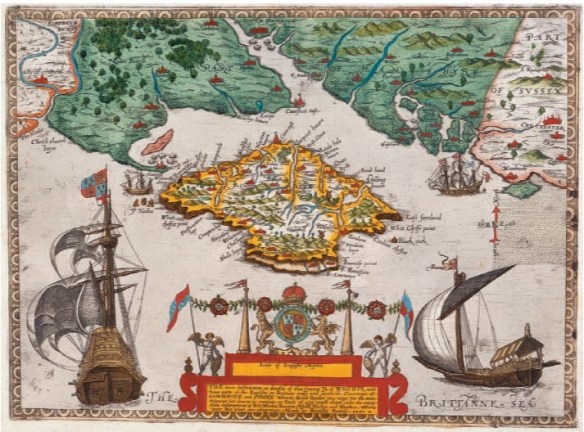
The History of Cartography Project

The History of Cartography Project has been awarded a five-year grant from the National Science Foundation to study the origins and development of modern cartography. The research will facilitate preparation of Cartography in the Nineteenth Century, Volume Five of the groundbreaking History of Cartography series.

This unique, international research and publishing venture, based at the UW-Madison, is dedicated to promoting a deeper understanding of cartography among scholars and the general public. The first three volumes of the series are available in print and are freely available online.  The final three volumes will be published in print, as e-books, and online as well.

historyofcartography

Peter Gould Student Paper Competition

The Health and Medical Geography Specialty Group (HMGSG) invites current undergraduate and graduate students to submit their work to the specialty group’s annual Peter Gould Student Paper Competition. The competition is meant to promote written scholarship by students across the field. Single-authored papers from any medical, health, disability and/or health systems related topic are encouraged.

The deadline for submitting an extended abstract is November 2, 2014.

More information here.

Though the prize is only $100, having your name associated with Peter Gould’s would be a very good thing for an up-and-coming student’s career!

And while you are at it, join the AAG!

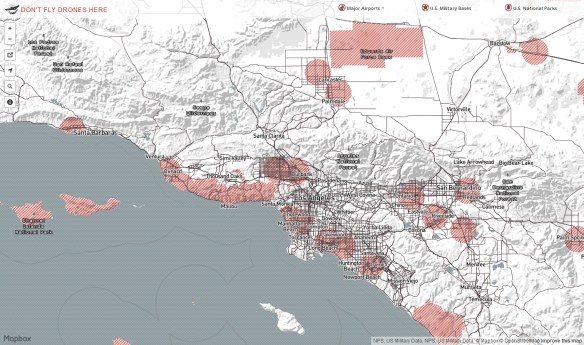
Operating UAVs in US Airspace – The Legal Implications

The introduction of unmanned aerial vehicles (UAVs), or “drones,” into the U.S National Airspace System for commercial use raises a number of complex legal and policy issues. Understanding what is currently permitted is made more challenging by almost-daily reports of new court decisions, proposed regulations, possible executive orders and Federal Aviation Administration (FAA) approvals granted for certain restricted uses. This webinar will clarify the current status of UAVs in the United States and raise important future issues.

Energy Infrastructure with FEMA National Flood Hazard

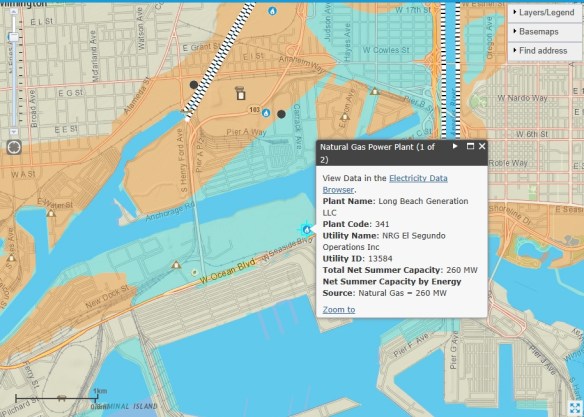
This week the US Energy Information Agency announced the availability of a new mapping tool that details the flood risk faced by our existing energy infrastructure. The map has icons located on sites like distribution terminals and power plants and allows users to overlay the existing flood risk on those sites. The clear message is that a lot of our infrastructure is already at risk.

floodapp

Flood hazard information from FEMA has been combined with EIA’s energy infrastructure layers as a tool to help state, county, city, and private sector planners assess which key energy infrastructure assets are vulnerable to rising sea levels, storm surges, and flash flooding.