Ready to lose hours of productivity digging through decades of music from around the world? Check out this app, called Radiooooo, that uses a world map for you to access tunes from every decade back to 1900. Continue reading
Category Archives: Fun Stuff
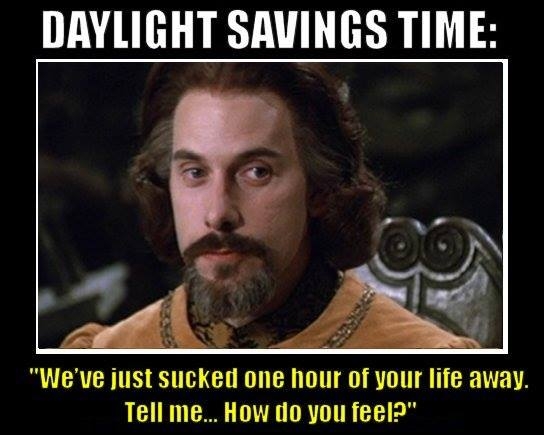
No Daylight Savings Time in California?

How do you feel today? How was your commute into work? Feeling a little run-down because you lost an hour of sleep?
Finally: Tallest Building in LA Gets an Observation Deck … and Skyslide!
The US Bank Tower in downtown LA (formerly Library Tower and First Interstate Bank World Center) is a 73 story, 1,018 foot tall skyscraper at 633 West Fifth Street and is the tallest building west of the Mississippi River (11th tallest in the US). The building was constructed from 1987 to completion in 1989.
For many years I wondered why the tallest building in downtown LA never had an observation deck. It was a bummer not to have one, especially on our tallest building! But finally in July 2014, the owners of the skyscraper announced construction of an observation deck on the 69th and 70th floors, a restaurant on the 71st floor, and a glass slide outside to slip from the 70th floor to the 69th!
It should all be ready for you to try out by mid-2016. Check it out!
And if you wait until 2017, the new 73 story Wilshire Grand being constructed now will have its own sky-high observation deck and restaurant, plus an infinity pool on the rooftop!
Leap Year 2016: Fun Facts!
Today is leap year day! Every 4 years (well, almost … read on) we have an extra day in February (the 29th) added to the calendar. For those that have wondered why, here are some interesting facts:
Why do we have leap years?
A leap year, where an extra day is added to the end of February every four years, is down to the solar system’s disparity with the Gregorian calendar. A complete orbit of the earth around the sun takes exactly 365.2422 days to complete, but the Gregorian calendar uses 365 days. So leap seconds, and leap years, are added as means of keeping our clocks (and calendars) in sync with the Earth and its seasons.
Julius Caesar vs. Pope Gregory
The Roman calendar used to have 355 days with an extra 22-day month every two years until Julius Caesar became emperor in the 1st Century and ordered his Alexandrian astronomer Sosigenes to devise something better. Sosigenes decided on a 365-day year with an extra day every four years to incorportate the extra hours, and so February 29th was born.
Why does the extra day fall in February?
All the other months in the Julian calendar have 30 or 31 days, but February lost out to the ego of Roman Emperor Caesar Augustus. Under his predecessor Julius Caesar, February had 30 days and the month named after him, July, had 31. August had only 29 days. When Caesar Augustus became Emperor he added two days to “his” month to make August the same as July. So February lost out to August in the battle of the extra days.
Refining the system about 500 years later
As an earth year is not exactly 365.25 days long, Pope Gregory XIII’s astronomers decided to lose three days every 400 years when they introduced the Gregorian calendar in 1582.
What about leap seconds?
Leap years are not directly connected to leap seconds, but both are for the purpose of keeping the earth’s rotations in line with our clocks and calendars. Leap seconds are added to bring the earth’s rotation into line with atomic time. A leap second was added at the end of June last year, when immediately before midnight dials read 11:59:60.
Atomic time is constant, but the Earth’s rotation is gradually slowing down by around two thousandths of a second per day. Leap seconds are therefore crucial to ensuring the time we use does not drift away from time based on the Earth’s spin. If left unchecked, this would eventually result in clocks showing the middle of the day occurring at night.
The extra second can sometimes cause problems for some networks which rely on exact timings. When a leap second was added in 2012 Mozilla, Reddit, Foursquare, Yelp, LinkedIn, and StumbleUpon all reported crashes and there were problems with the Linux operating system and programs written in Java.
A leap year isn’t every 4 years
The year 2000 was a leap year, but the years 1700, 1800 and 1900 were not. There’s a leap year every year that is divisible by four, except for years that are both divisible by 100 and not divisible by 400. The added rule about centuries (versus just every four years) was an additional fix to make up for the fact that an extra day every four years is too much of a correction.
So far the math has worked ever since but the system will need to be rethought in about 10,000 years’ time. Perhaps when robots take over they will think of something for us!
Maps of the Earth’s Most Cursed Destinations
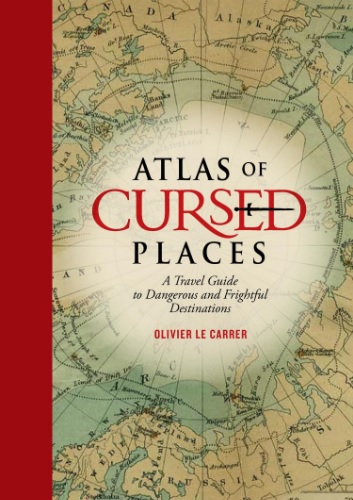
If you know someone that loves maps, then they would probably enjoy the Atlas of Cursed Places: A Travel Guide to Dangerous and Frightful Destinations.
The book, organized into eight geographical regions, chronicles sites across the globe that have been afflicted by a miscellany of misfortunes.
You know you want this book!
Interactive Tours of New California National Monuments
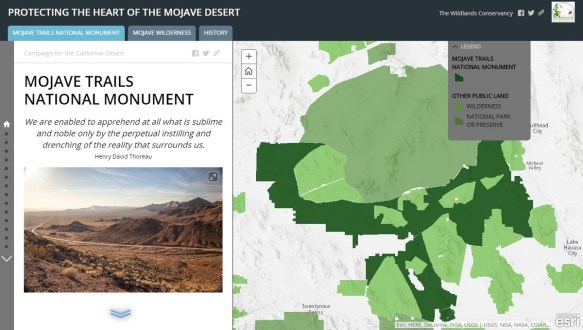
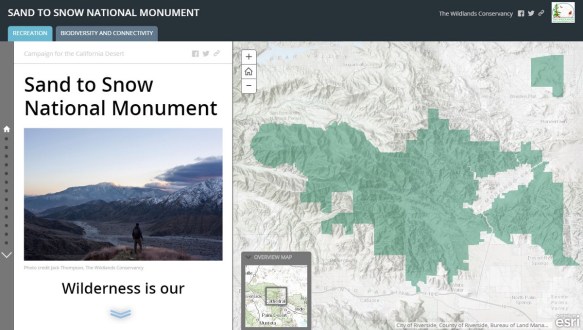
On February 12th three new areas were designated as national monuments in the California desert: Mojave Trails National Monument, Sand to Snow National Monument, and Castle Mountains National Monument.
Encompassing nearly 1.8 million acres of public lands, these new monuments are the culmination of decades of hard work and collaboration between government, conservation organizations, and local communities.
The Wildlands Conservancy played a major role in the creation of the Mojave Trails National Monument and Sand to Snow National Monument. For the last 20 years they have acquired significant landscapes and saved them from development while stitching together California’s largest nature preserve system.
So you can better understand the new monuments, The Wildlands Conservancy has created two interactive tours of the Mojave Trails National Monument and Sand to Snow National Monument. Check them out and go visit soon!
Earth Wind Map
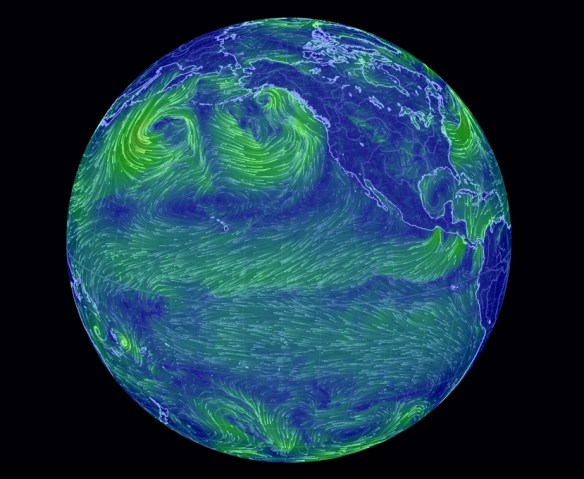
Check out this interactive Earth Wind Map. The app is a visualization of global weather conditions forecast by supercomputers and updated every three hours. You can view air currents, ocean waves and sea surface temperature, CO/CO2/SO2 surface concentrations, and air containing particulates. You can change projections and display settings by clicking in the lower-left corner of the app.
National Weather Service Mosaic
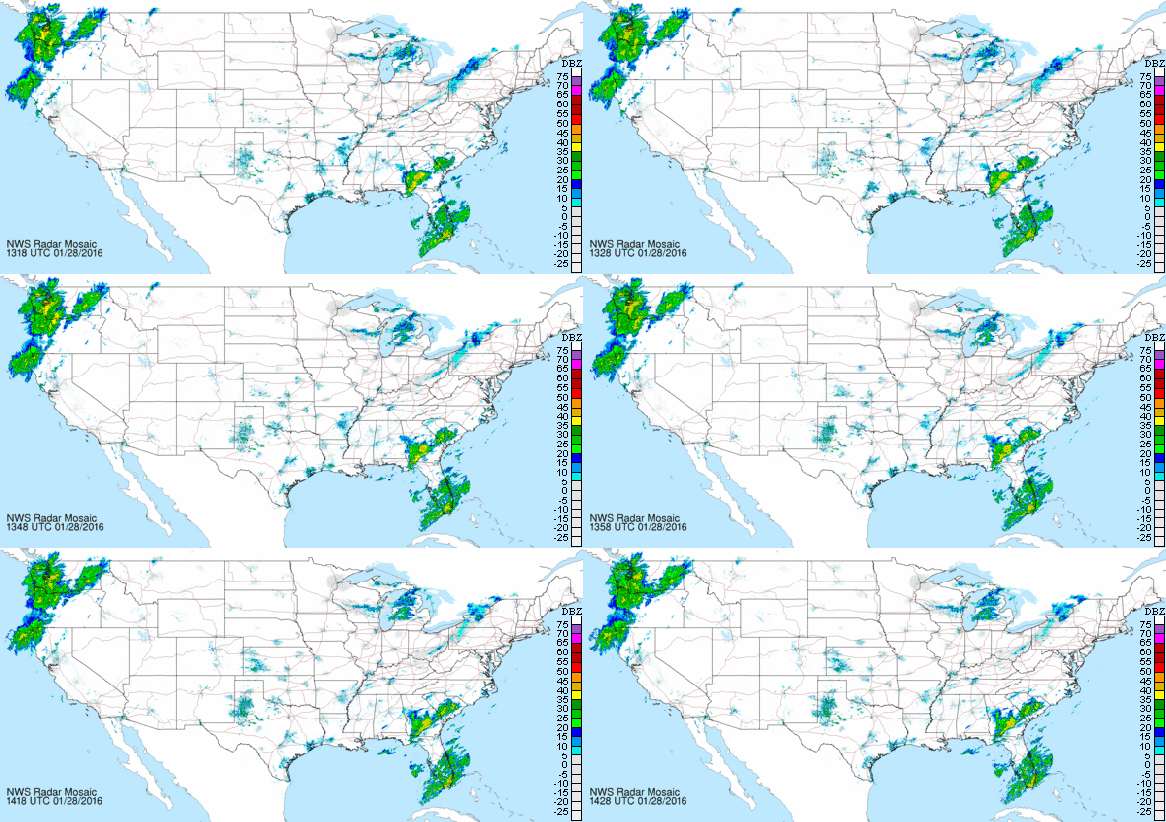
The National Weather Service’s National Mosaic displays an uninterrupted look at the Doppler weather radar feeds for the contiguous United States. The weather radar loops so you can see where rain and snow is occurring and where it is going. There is also a link to view a super-sized moving image as well. The map is clickable to take you to the region’s focused site too. Check it out!
Explore the X-Files
Worldwide Air Pollution Map
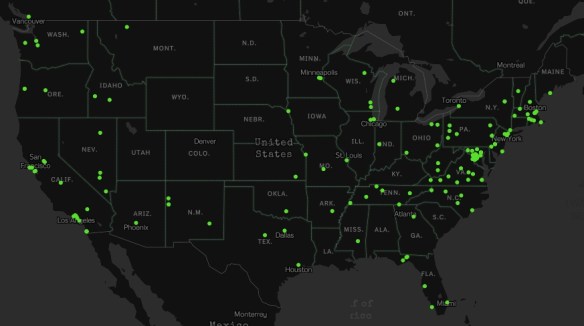
Plume Air Report is a weather forecasting app for urban air pollution. The free app, developed by Plume Labs, tells you if it’s safe to run, bike, go out with your children or eat outside.
To do this, the company relies on thousands of pollution monitoring stations. The company aggregates the usual suspects, nitrogen dioxide (NO2), ozone (O3) and particulate matter (PM2.5 and PM10), and then hides all the complexity behind a simple index. The app covers over 150 cities around the world. Check it out!