Finding Government Publications

The US government is one of the world’s largest publishers, both in paper and on the web.  More than 200 years ago Congress authorized the sending of free copies of certain government publications to libraries around the country.  This developed into the Federal Depository Library Program (FDLP), with more than 1,100 public, academic, and government libraries as members.  Each of these libraries receives government materials for free, and is required to make them available to the public.

The Federal Depository Library Program is run by the Government Printing Office (GPO), which recently changed it’s name to Government Publishing Office in order to indicate it is now more involved with electronic data rather than paper.

If you are looking for government publications and other federal information, give these online sources a try:  Continue reading
Map Use: Reading, Analysis, Interpretation

Very soon ESRI Press will be releasing the 8th edition of “Map Use: Reading, Analysis, Interpretation”.  The e-book will be available September 19th and the print book on November 7th.

Map Use is a comprehensive, foundational textbook, providing students with the knowledge and skills to read and understand maps, and offers professional cartographers a thorough reference resource.  Continue reading

1979 California Water Atlas

The California Water Atlas, published by the State of California, was a landmark atlas with the first comprehensive look at California’s extensive water system in a geographic context. The atlas itself measured about 18.5 x 16 inches and had hundreds of maps and infographics that told the story of California water in different ways.

The goal of the atlas was to “introduce Californians to the complex and compelling issues of water in the state, giving them the information they need to participate more actively in the decisions that governmental agencies make”. Continue reading

New GIS Book Call For Chapters

Dear Colleagues,

We would like to invite you to submit a chapter for the book “Volunteered Geographic Information and the Future of Geospatial Data”, scheduled for release in 2017.

For further information, please visit http://www.igi-global.com/publish/call-for-papers/call-details/1945 .

Submission proposal deadline: May 14, 2016 (1-page proposal).

Please kindly help circulate this call among your colleagues and students who may be interested.

Dr. Claudio Campelo, UFCG, Brazil
Dr. Michela Bertolotto, UCD, Ireland
Dr. Padraig Corcoran, Cardiff University, UK

(Editors)

Free Python Stuff

Looking for free basic Python training?  Check out these free webinars:

  1. 7 Reasons All GIS Professionals Should Learn How to Program with Python
  2. Creating Variables and Assigning Data
  3. Basic Python Statements
  4. Creating and Using Functions in Python
  5. Using Advanced Python Data Structures (Lists, Tuples, Dictionaries)
  6. Using Advanced Python Data Structures (Classes and Objects)
  7. Reading and Writing Text Files with Python
  8. Introduction to ArcPy
  9. Building GUI Applications for ArcGIS Desktop with Python – Part 1
  10. Building GUI Applications for ArcGIS Desktop with Python – Part 2

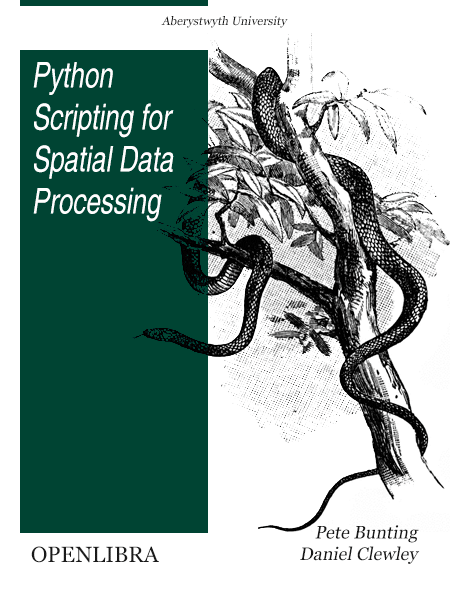
Looking for a free Python book?  Check this one out!

python-scripting-for-spatial-data-processing-openlibra

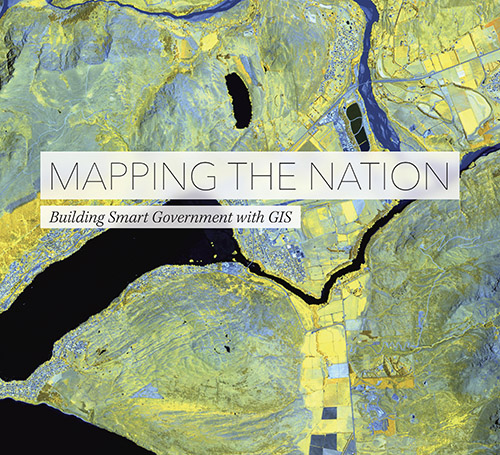
Mapping the Nation: Building Smart Government with GIS

Mapping the Nation: Building Smart Government with GIS, a new book from ESRI, illustrates the many ways government uses maps created with geographic information system (GIS) technology to create safer, healthier, and more resilient communities.

This is the 6th book in ESRI’s Mapping the Nation series.  Chapters of the book are devoted to over 100 maps related to public safety, public policy, national mapping and statistics, education, health, the environment, and humanitarian work.

mappingnation_lg

The Changing Geospatial Landscape

The National Geospatial Advisory Committee released a report in December 2015 titled “The Changing Geospatial Landscape: A Second Look.”

The report states:

In this document, the committee contributes its perceptions of incipient technologies that we expect will guide, define or determine the development of this industry in the near and medium term. Of even greater importance, the report highlights those aspects of innovation that bear directly on public policy and on individual privacy and security. The NGAC has also prepared this report to help inform the development of the next iteration of the strategic plan for the National Spatial Data Infrastructure (NSDI) and the development of transition recommendations for the next Presidential administration.

You can view the report here.