URISA’s GIS-Pro 2020 will be held virtually on September 29 to October 2. Because it will be virtual this year, the cost to attend has been reduced. For more info and to register, click here.
GIS-Pro 2020
Reply


URISA’s GIS-Pro 2020 will be held virtually on September 29 to October 2. Because it will be virtual this year, the cost to attend has been reduced. For more info and to register, click here.
If you studied Geography/Cartography at any of the colleges in SoCal in the 80’s and 90’s, you might remember Professor Norman Thrower at UCLA. You also might remember his book “Maps and Civilization”. Professor Thrower turned 100 years old last year. Sadly he passed away on September 2, 2020.
Check out this article written last year about him.
In March 1853, Congress appropriated $150,000 to survey proposed routes for a transcontinental railroad. The United States Army’s Corps of Topographical Engineers embarked on the work. There were five surveys conducted. One went from St. Paul, Minnesota to Puget Sound, where Seattle was later founded. Another traveled from St. Louis to San Francisco. A third started in what became Oklahoma and headed for San Pedro south of Los Angeles. Then, there was a route from Texas to San Diego. Finally, there was a survey that traveled the Pacific coast from San Diego to Puget Sound.
Between 1856 and 1861, eleven large volumes of published reports from the surveys were issued by the federal government. They included Continue reading
The Federal Railroad Administration (FRA) Trespassers Casualty Map is an interactive map that displays all railroad trespasser related injuries and fatalities dating back to June 2011. The interactive map also allows users to view where trespassing accidents and fatalities occur, trends of where accidents are most concentrated, details on what occurred at accident locations, and the outline of Class I Railroad and Main Line networks. Check it out!

If you are looking to track fires in California, stay on top of warnings from local fire officials, and find the latest information on traffic and smoke forecasts, then these interactive maps will help you keep on top of it all.
Cal Fire: This page brings you real-time updates on fire location and containment, as well as updates on evacuation orders and other news.

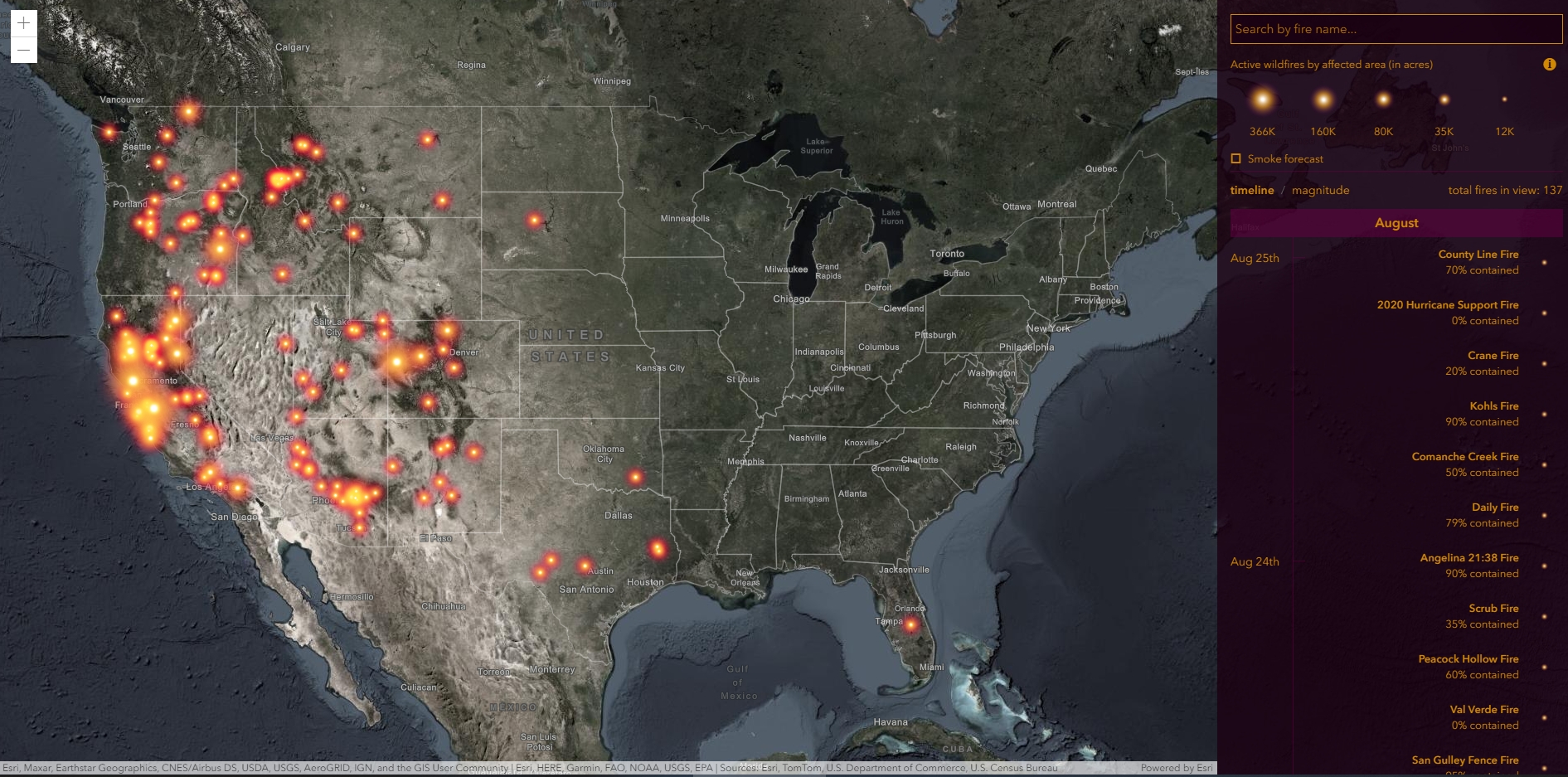
ESRI Wildfire Story Map: This interactive map uses geolocation tools to track a fire’s coordinates and lets you look up additional data like smoke forecasts.
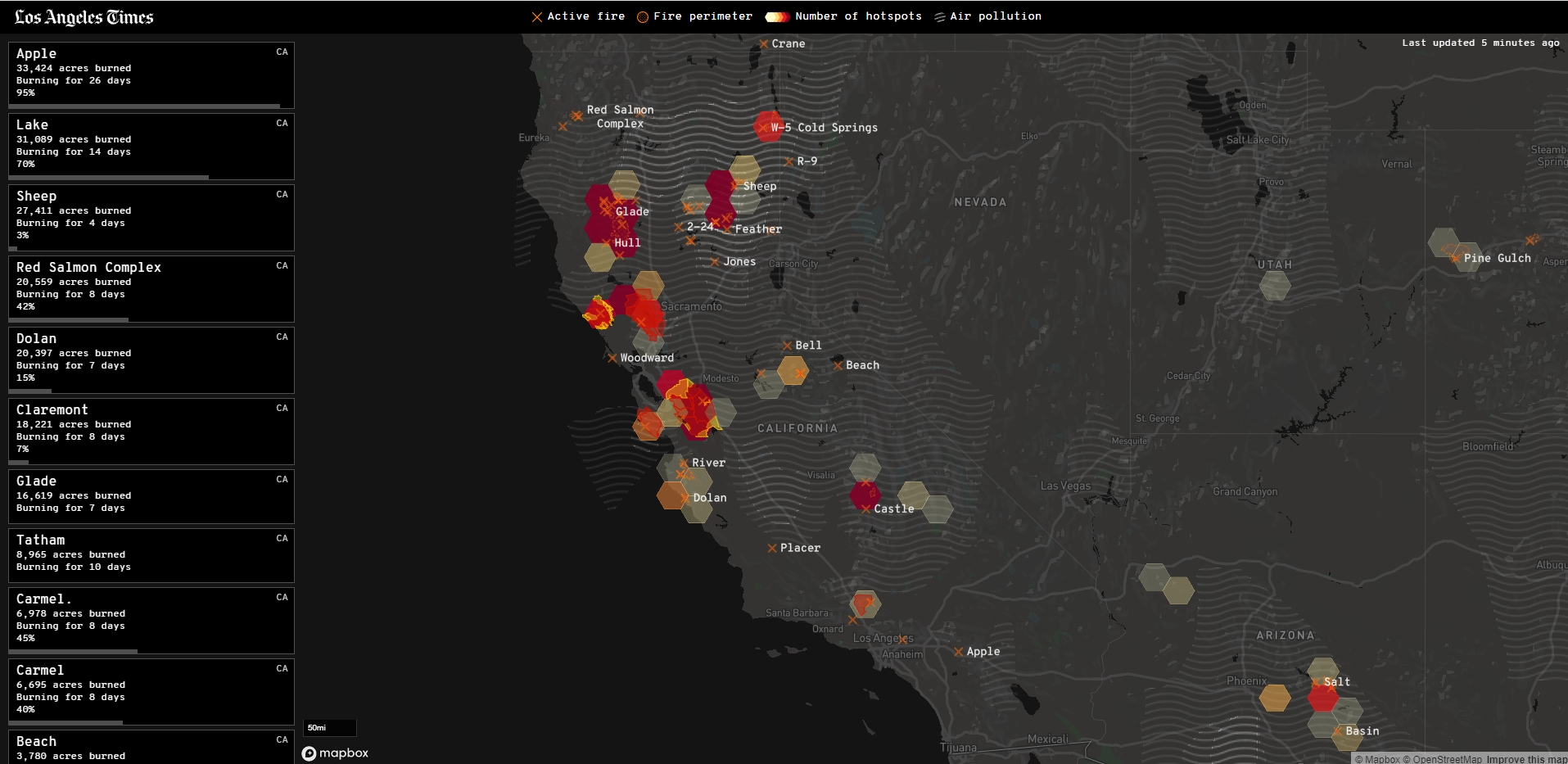
Los Angeles Times: A great source for local fire info, with a nice interactive map and tools.
I remember 30 years ago working on ESRI’s COGO software. If you ever used it back in the day, you were a hero creating a landbase from scratch with only measurements from tract and parcel maps and making sure everything closed well with your traverses.
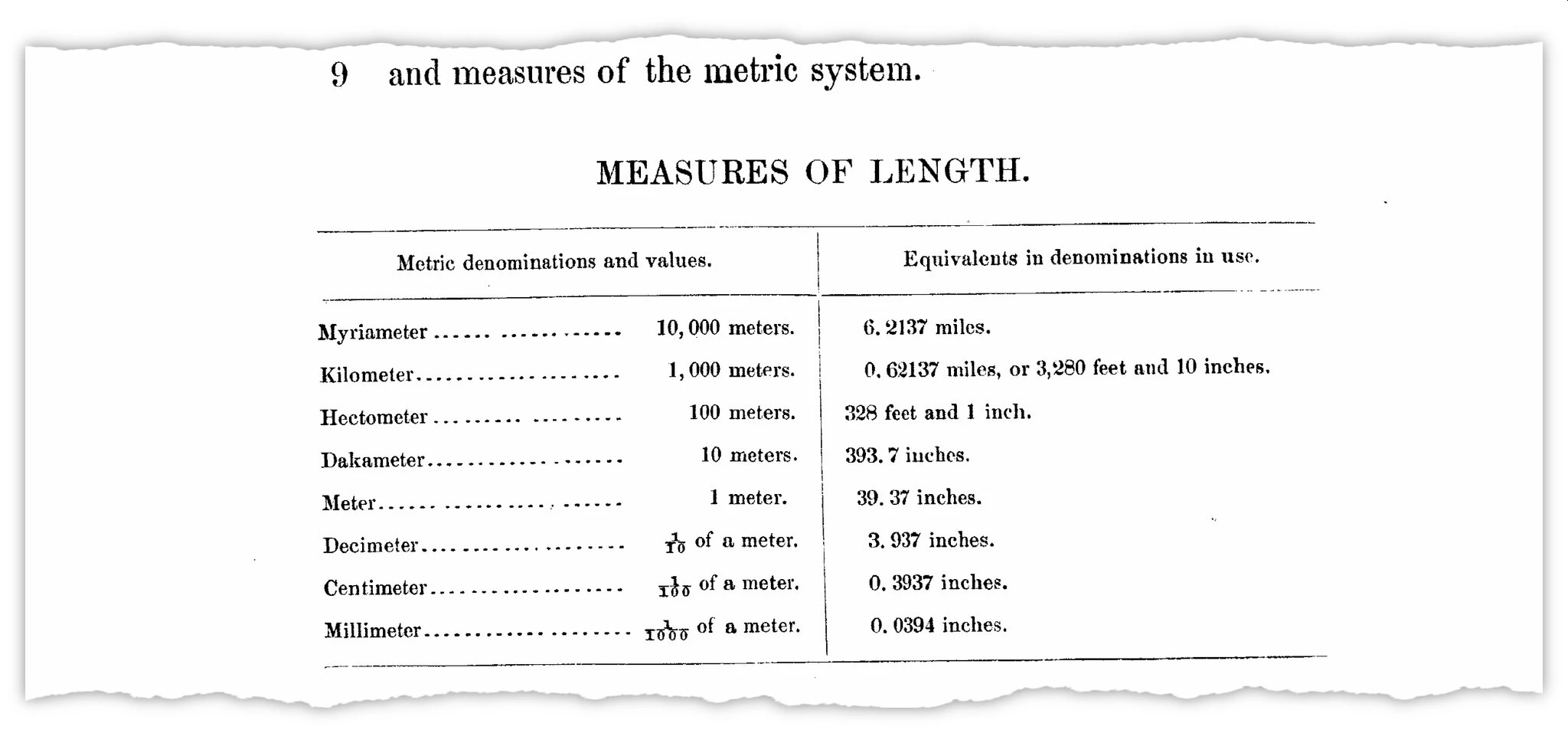
One thing I found interesting was there were two definitions for measuring 1 foot. There was the international foot, which was defined as 1 inch = 2.54 centimeters exactly, or 1 foot = 0.3048 meters exactly. The other was the older US survey foot, which was defined as 39.37 inches = 1 meter exactly, or 1 foot = approximately 0.304800609601 meters, or multiplying US survey feet by the fraction 1200/3937 to get meters.
The US survey foot has been around since 1893 while the international foot was established in 1959 and is slightly more exact. One of the reasons we retained the US survey foot was because of our state plane coordinate systems, which were derived from the national geodetic control network, and are based on the relationship of 1 meter equaling 39.37 inches exactly. Fundamental survey units, such as rods, chains, statute miles, acres, sections, and townships, all depend on the relationship of 1 meter equaling 39.37 inches exactly.
Using two measurements for the same unit have been confusing over the years. But now the US survey foot will be obsolete by January 1, 2023. Click below to read more about it!
Teachers should check out this ESRI webinar on August 19th, taking a look at geospatial tools for any classroom: home, outdoors, school, or virtual. Click here for more info and to register.
Wondering what companies took the government’s SBA Paycheck Protection Program loan? How about what government agencies received Federal Weapons that were loaned to them? How about who received Federal Grants? Or what colleges received Coronavirus Bailout Money? You can find all this out at Open The Books. They have mapping applications that allow you to zoom in on your town/county/state to see the data. Check it out!

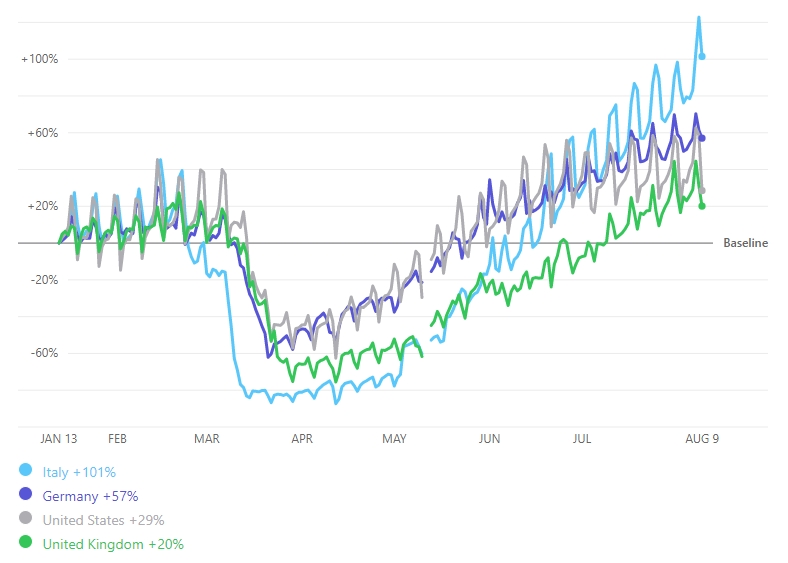
Besides Google’s Community Mobility Reports, Apple has their own data on COVID-19 Mobility Trends. Their data was generated by counting the number of requests made to Apple Maps for directions in select countries/regions, sub-regions, and cities. The thought is as COVID-19 lock downs go down, direction requests go up. Check it out!
 SoCalGIS.org