2020 Census LUCA Operation to Begin

Starting in July, governments around the country will start the process of ensuring the accuracy of their address lists through the 2020 Census Local Update of Census Addresses operation. LUCA is a voluntary, once-a-decade opportunity for governments to add, correct or delete addresses on the lists and maps used to conduct the decennial census. An accurate and complete census helps governments plan for future infrastructure, program and service needs.

On July 14, the U.S. Census Bureau will begin mailing invitation letters and registration forms to approximately 39,000 tribal, state and local governments across the nation to encourage them to participate in LUCA. This operation is the only opportunity governments have to review and improve the Census Bureau’s residential address list before the 2020 Census.

The Census Bureau relies on a complete and accurate address list to reach every living quarter and associated population for inclusion in the 2020 Census. Participation in LUCA helps ensure an accurate decennial census count in communities across the nation.

LUCA Participation

All LUCA participants receive:

  • A complete census address list for their jurisdiction to review and update.
  • A list that contains the Census Bureau’s count of residential addresses for each census block within their government for reference.
  • Census Bureau maps.

Promotional workshops are underway, and starting in October, training workshops will offer “hands-on” experience using the LUCA materials. Self-training aids and webinars will also be available through the LUCA website. Beginning in February 2018, registered participants will receive materials to review the Census Bureau’s address list for their jurisdiction, and they will have 120 days to return their updates to the Census Bureau.

Other LUCA milestones and information can be found in the 2020 Census detailed LUCA Information Guide.

Road to the 2020 Census

The goal of the 2020 Census is to count everyone once, only once, and in the right place. The Census Bureau is using expert resources and experience in and out of the government to make the 2020 Census a success. As census operations and testing move forward, the Census Bureau will continue to improve its innovations using mobile and geospatial technology, administrative records and self-response via the internet.

Daniel Velez
Public Information Office
301-763-3030 / pio@census.gov
census.gov

New Leaflet.js/Turf.js Course

Hello everyone,

I wanted to let you know that I released a new course on Udemy called “Display and Analyze your GIS data on the web with Leaflet.js”

This course has almost 13 hours of content on programming client-side applications with Leaflet and Turf.js.  I believe it is by far the most comprehensive educational material available on Leaflet.js web mapping.

Other than the cost of the course (Now 50% off, $50 total) there are no costs using this method. It uses all open source material. Learn more or sign up at
https://www.udemy.com/display-and-analyze-gis-data-on-the-web/?couponCode=MAILING

Thanks,
Mike Miller
http://www.millermountain.com/


Bring LARIAC5 Early Access Imagery into ArcGIS Desktop

If your organization participates in LARIAC, then you probably know that right now you have Early Access to the 2017 imagery (both orthos and obliques) in Pictometry’s online CONNECTExplorer application.  Keep in mind the Early Access imagery still has work to be done on it, but at least you can take a look at the new stuff while they are working on it.

One thing you can do is bring some of the ortho imagery into your ArcGIS Desktop environment.  Here are the simple steps to do so:

  1. Login to ConnectExplorer and zoom to the area you are interested in.  Make sure to set the imagery date to “Early Access”.
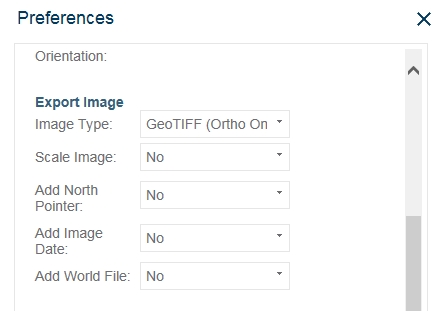
  2. Next, set your Export Image preferences to output a GeoTIFF and turn off scale image, north pointer, and image date if you want.  You do not need a world file for a GeoTIFF.

    lariacortho1

  3. Next, bring up the ortho view of the area you want.  Make sure to zoom in quite a bit to get the higher resolution.

    lariacortho2

  4. In the lower-right corner, click on the export icon and select Export Entire Image.

    lariacortho3

  5. Now bring the GeoTIFF into ArcGIS Desktop.  Here I have the new 2017 ortho displayed on top of the 2014 ortho.

    lariacortho4

  6. Your image might look a little choppy.  To fix that, open the layer properties, select the Display tab, and change the “Resample during display” setting to “Bilinear Interpolation”.  The “Nearest Neighbor” setting will make your image too choppy looking.  Bilinear does a great job smoothing it out.

The GeoTIFF images are actually using geographic coordinates (WGS84), but they reproject very well into State Plane.

This is a very quick way to bring in the new 2017 Early Access imagery into your maps if you need to.  As the imagery is cleaned up and worked on to create preliminary images, there will be map services setup for you to consume in your applications.  But for now, you can use these steps.  Enjoy!  -mike

ArcGIS for Local Government UC 2017

Today there will be a meetup, June 22nd at 11am (PDT), about what’s coming in the ArcGIS for Local Government UC 2017 release as well as ArcGIS for Local Government events at the ESRI User Conference in July.  If you are interested, please join the meetup today by registering here.

After registering, you will receive a confirmation email containing information about joining the webinar.

USGS Requesting Information

The USGS is requesting information from the land imaging community for user requirements for future Landsat systems. To view the RFI go to www.fedconnect.net, click on “Search Public Opportunities Only”, then choose search by “Reference Number” which is G17PS00634.  Click on right side of the screen to view the RFI document.  An overview:

This is a Request for Information – User Needs for Future Landsat Missions. The U.S. Geological Survey (USGS) Land Remote Sensing Program has collected a diverse set of U.S. Federal civil user measurement needs for moderate-resolution land imaging to help formulate future Landsat missions. The primary objective of this RFI is to determine if these needs are representative of the broader Landsat user community, including, but not limited to, private sector, government agencies, non-governmental organizations and academia, both domestic and foreign. Responses to this RFI will be considered along with other inputs in future system formulation. Please see the RFI for full details.

Please pass along to your land imaging constituents this information.  Any inquiries about the RFI can be sent to the Contracting Officer, Vickie Floyd (vfloyd@usgs.gov), during the open RFI period.  Responses are due no later than 11:00 am ET, July 14, 2017.