Kenneth Appel, who used a computer to solve the four color map problem, dies at 80.


Kenneth Appel, who used a computer to solve the four color map problem, dies at 80.
Check out UCLA Library’s collection Maps of Los Angeles, California, the United States, and the World.
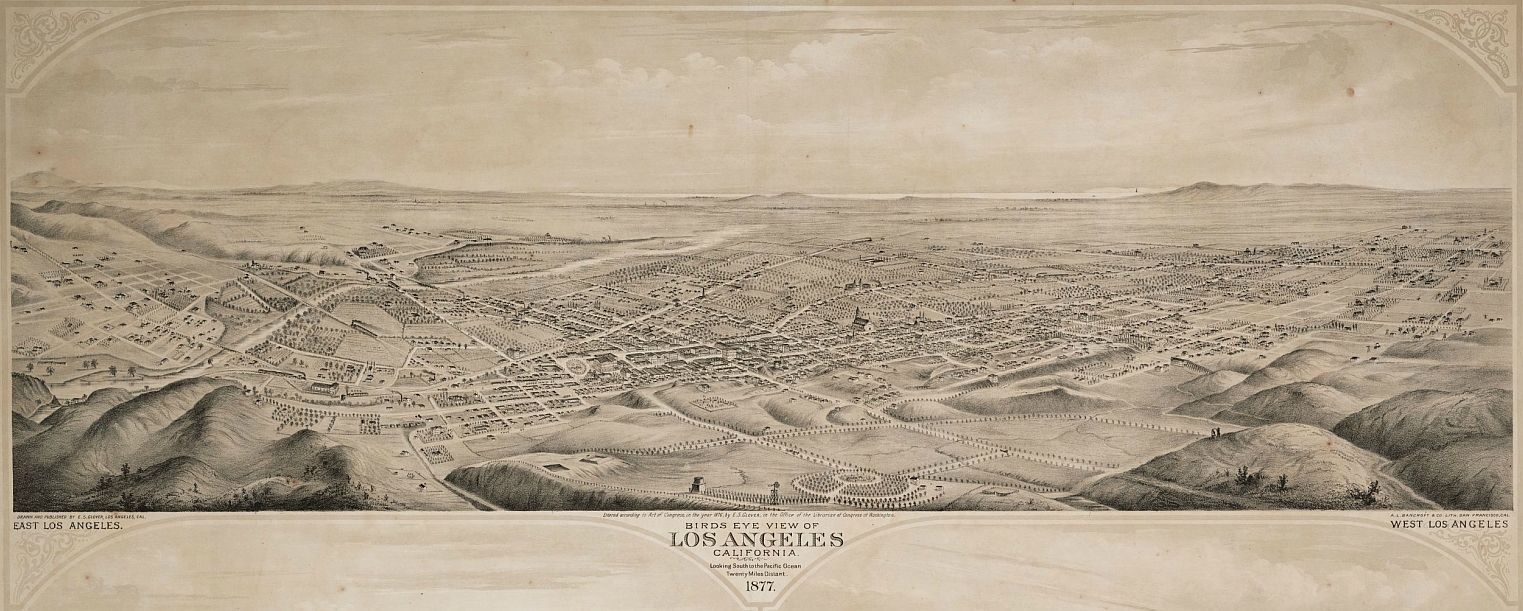
Check out the new TopoView site. TopoView is intended to serve the immediate need for the older, conventionally printed topographic maps to become easily searched, viewed, and downloaded. The approximately 163,000 maps available through this interface were scanned by the USGS Historical Topographic Mapping Collection (HTMC) project.
Using a site that tracks dollar bills (Where’s George?), a theoretical physicist noticed that our state boundaries are rather arbitrary, but that money tends to stay within new, more realistic boundaries. Read the story here.

The State of California has a new GeoPortal web site for access to geospatial data resources. Check it out at http://portal.gis.ca.gov .
The California Geological Survey (CGS) has developed a new online tool that allows you to search all of CGS’s Regulatory Maps, Landslide Maps, and Tsunami Maps. Also included are related reports and GIS data.
Regulatory Maps include:
Landslide Maps include:
Tsunami Maps include:
CGS will be adding more product to the warehouse. Visit their site at http://www.quake.ca.gov/gmaps/WH/index.htm .
From govloop.com and ESRI, a very cool infographic on how GIS technology powers our daily lives.

Take a look at the Sea Level Rise and Coastal Flooding Impacts application from NOAA.

Besides setting sea level rise up to 6 feet, you can also display levels of confidence of the inundation areas, flood frequency, and socioeconomic vulnerability of nearby communities.
Interesting tool for viewing different map projections.
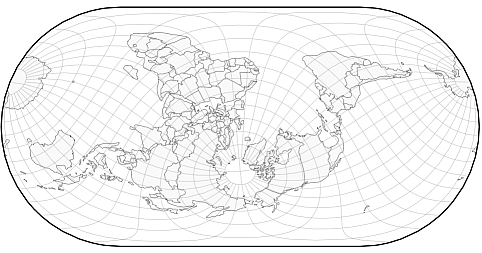
The globe is live in the tool so you can grab it and turn it to see the distortions near the edges. Best viewed in Chrome or Firefox.
Hello everyone:
USGS operates the National Map Viewer (nationalmap.gov/viewer) as a national GIS data resource. The site has long offered viewing and download access to a number of individual basemap layers (imagery, elevation, land cover, boundaries, hydrography, etc.). Recently, some new capabilities have been added providing more utility to GIS users.
1. Contour lines – the same contour lines shown on the new 1:24,000-scale US Topo can now be downloaded as vector files for use in GIS. The contour lines are available in a shapefile format. Contour lines are pre-staged in one degree blocks for quick retrieval.
2. Download Options – have been expanded to include selecting areas by a bounding box or by specifying coordinates (in decimal degrees). The site has supported the ability to download data by reference region (such as county or quadrangle or watershed) or by the map viewer extent. Now these additional options make it easier to select data for the exact region you need.
3. More maps and data to view and download – in addition to the contour lines mentioned above. National Map Viewer had added an elevation availability basemap layer which can be toggled on and off. This lets users know what resolution of elevation model is available (such as 1/3 arc-second (10m)) for a given area. Another improvement is the ability to download scanned topographic maps from the historical topographic map collection, which you will see as an option under the “available data for download window.”
We invite everyone to visit the National Map Viewer and see these new additions. And, as always, if you have any questions or need help locating or downloading data please feel free to contact us anytime. Thanks,
Drew Decker
Carol Ostergren
 SoCalGIS.org